
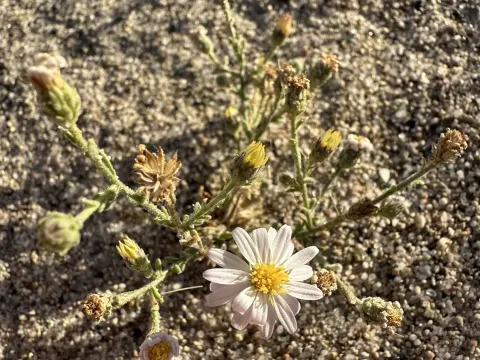
Leucosyris
Leucosyris
Leucosyris belongs to the Asteraceae family and requires specific preparation for successful germination. Sowing is typically conducted in early spring once the risk of frost has passed, ensuring the soil has adequately warmed up for seed activation.
What the section contains

Leucosyris
The seeds should be sown at a shallow depth of approximately 1 to 2 centimeters. This depth allows sufficient access to oxygen while maintaining the necessary contact with moist soil particles for consistent germination rates.
Seed stratification is often recommended to break dormancy, ensuring a uniform emergence of seedlings across the field. This process mimics natural winter cycles and increases the vigor of the young plants.
Row spacing should be maintained between 30 and 40 centimeters to facilitate aeration and mechanical weeding. Proper spacing is essential to reduce competition for nutrients and water among individual plants during the active growth phase.
Post-sowing irrigation should be applied carefully to prevent waterlogging. Excessive moisture can lead to seed rotting, especially in soils with high clay content, so maintaining a balance is critical for establishment.
Leucosyris thrives under full sun exposure, which is necessary for the development of strong, healthy stems. Providing at least six to eight hours of direct sunlight per day is optimal for maximizing the plant's health and productivity.
Well-draining, sandy-loam soils are the preferred medium for this culture. Its root system is sensitive to prolonged water saturation, making proper site selection and drainage management fundamental aspects of agronomy for this species.
This plant is noted for its high drought tolerance once established. Its deep taproot allows it to survive in arid environments, making it a viable candidate for sustainable agricultural practices in regions with irregular rainfall patterns.
Fertilization regimes should focus on providing essential macronutrients such as phosphorus and potassium. These nutrients support root expansion and overall stress resistance during the heat of the summer months.
Climatic adaptability is a strong suit for Leucosyris. It performs best in temperate climates, showing significant resilience against heat stress and the ability to survive cool winters with minimal protection in most traditional habitats.
The primary threats to Leucosyris are fungal pathogens, specifically those that favor high humidity. Powdery mildew can affect the leaves during stagnant air periods, requiring proactive management through proper canopy thinning.
Pests such as aphids and spider mites may occasionally colonize the plants during dry spells. Monitoring for these pests is essential to prevent significant damage to the plant's photosynthetic capacity and overall vigor.
Preventative cultural practices, such as maintaining weed-free fields, significantly reduce the risk of secondary infections. Weeds can act as vectors for various diseases and harbor pests that target the crop.
In the event of an outbreak, integrated pest management (IPM) strategies should be employed. This involves identifying the specific pest life cycle and using targeted, environmentally friendly interventions to mitigate damage.
Maintaining soil health through consistent nutrient management and avoiding over-irrigation are the best defenses against root-related pathologies that could compromise the crop's longevity and performance.