
Ctenanthe burle-marxii
Ctenanthe burle-marxii
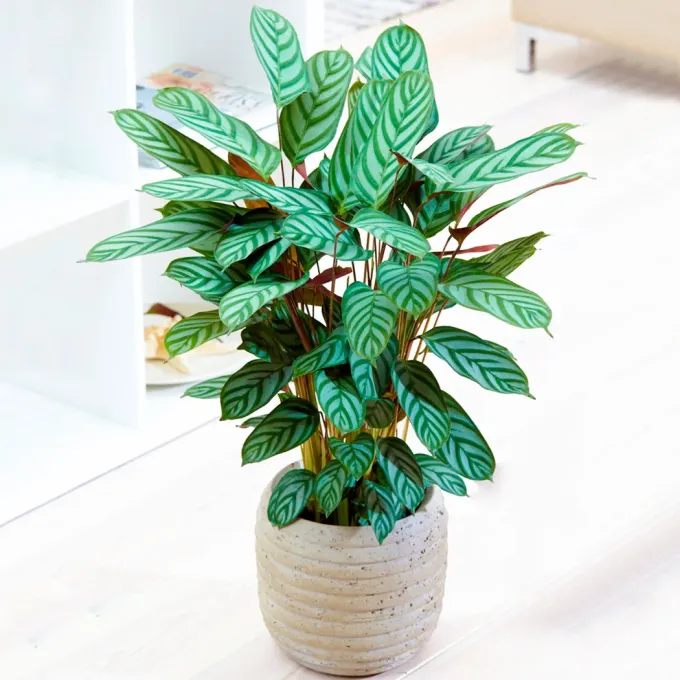
Description
Growing requirements
Ctenanthe burle-marxii is a perennial herbaceous plant belonging to the Marantaceae family. Native to the tropical forests of Brazil, it is highly valued for its striking, patterned foliage and low-growing, clumping habit.
The plant requires a high level of ambient humidity, ideally maintained between 60% and 80%. Dry indoor conditions frequently lead to crispy, brown leaf edges, making it essential to provide supplemental humidity via misting or pebble trays.
Temperatures should be kept consistently warm, preferably between 20°C and 25°C. The species is highly sensitive to cold drafts and sudden temperature fluctuations, which can cause significant stress to the foliage and root system.
Cultivation requires a well-draining, slightly acidic soil mix. A combination of peat moss, perlite, and bark is generally recommended to ensure proper aeration and prevent compaction around the delicate roots.
Bright, indirect light is essential for healthy development. Direct sunlight must be avoided, as it can scorch the leaves and fade their unique, dark-striped patterns, which are the main ornamental feature of the plant.
Main diseases and pests
Spider mites are the most common pest affecting Ctenanthe, particularly in environments with low humidity. They typically colonize the undersides of leaves, causing yellowing and webbing if left untreated.
Scale insects and mealybugs can also infest the plant. Regular inspection of stems and the base of the petioles is necessary to catch infestations early, allowing for targeted cleaning or treatment with systemic insecticides.
Root rot is the primary physiological threat, usually caused by overwatering or soil that remains saturated for extended periods. This disease weakens the plant quickly and is often fatal if not caught in the early stages.
To prevent disease, it is critical to allow the top inch of the soil to dry out slightly before watering again. Proper pot drainage is essential to ensure that excess water does not accumulate at the root zone.
Maintaining high plant hygiene, including cleaning dust from leaves and removing dead foliage, reduces the likelihood of pest outbreaks and promotes a robust, healthy growth pattern.