
Cylindropuntia davisii
Cylindropuntia davisii
Description
Growing requirements
Cylindropuntia davisii is a hardy perennial succulent belonging to the Cactaceae family. Native to the arid landscapes of the Southwestern United States, this species has evolved to thrive in nutrient-poor, rocky, and extremely dry environments.
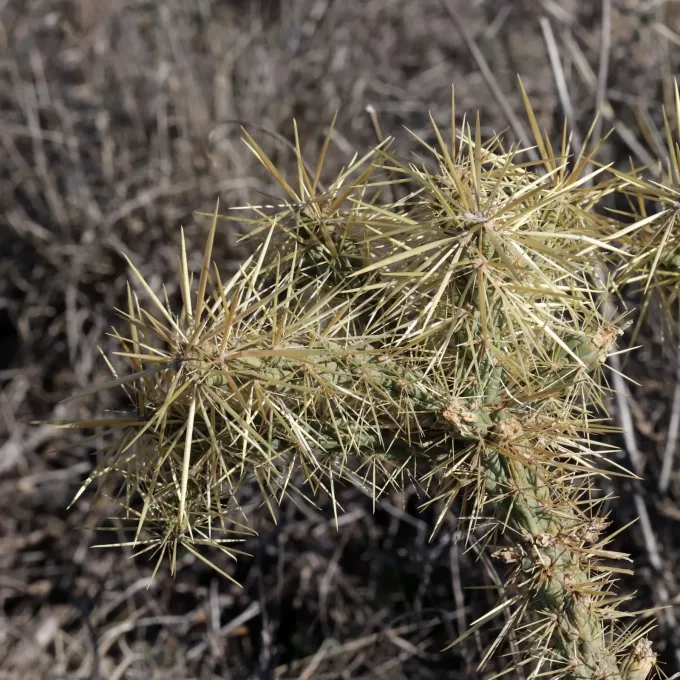
The plant is characterized by its cylindrical, branching stem segments, which are covered in a dense array of spines. These spines serve as an evolutionary adaptation to discourage herbivory and provide light shade to the plant's surface, reducing water loss through transpiration.
Cultivation success depends on providing full sun exposure throughout the day. If grown in containers or in a garden setting, it requires a minimum of six to eight hours of direct sunlight to maintain its compact shape and promote healthy seasonal flowering.
Soil composition is paramount for this species. A highly porous, gritty, and mineral-rich substrate is essential. The inclusion of inorganic materials such as pumice, perlite, and coarse sand ensures that water drains rapidly, preventing the oxygen starvation of the roots.
Temperature management should reflect its desert origins. While the plant is notably cold-hardy compared to many other cactus species, it performs best during hot, dry summer months. Proper dormancy in winter requires dry conditions to ensure the plant survives lower temperatures.
Main diseases and pests
The most significant threat to Cylindropuntia davisii is root rot resulting from waterlogged soil. Excess moisture inhibits root respiration and allows soil-borne pathogens to colonize the root system, often leading to total plant failure.
Pests such as mealybugs and spider mites are common enemies of this species. These insects reside in the crevices between segments, sucking sap and weakening the plant structure, which can lead to stunted growth or yellowing of the segments.
Cultural control, including manual removal of pests and quarantine of infected specimens, is a recommended first line of defense. If infestations persist, application of horticultural oils or specialized insecticides is necessary to preserve the plant's health.
Fungal infections, often manifested as dark spots or soft tissue lesions, are typically linked to high humidity combined with poor airflow. Improving the ventilation around the plant is an effective measure to mitigate these risks.
Weed management around the base of the plant is also vital. Weeds create a humid microclimate that traps moisture against the cactus stem, significantly increasing the likelihood of infection and attracting additional garden pests.