
Cylindropuntia tunicata
Cylindropuntia tunicata
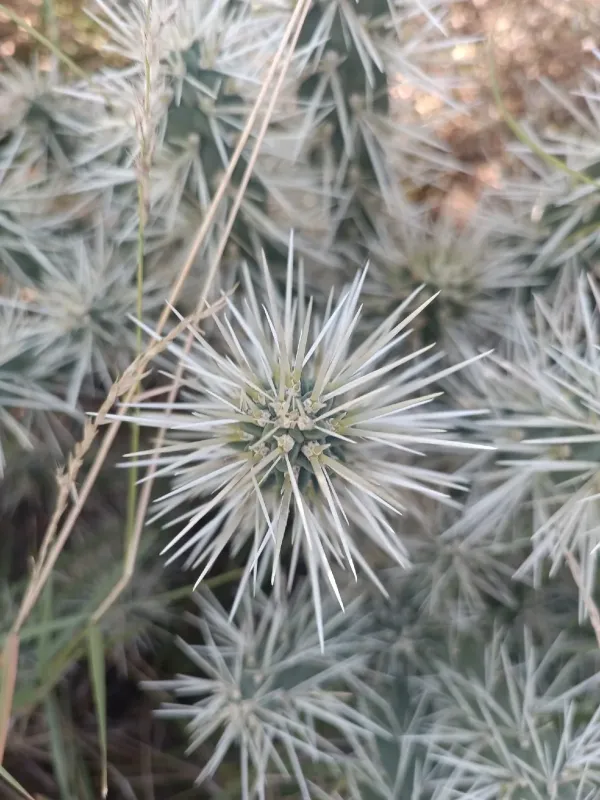
Description
Growing requirements
Cylindropuntia tunicata is a resilient succulent member of the Cactaceae family, native to the arid landscapes of Mexico and the Southwestern United States. It is recognized by its segmented, cylindrical stems protected by dense, dangerous spines.
The plant thrives in full sun exposure, requiring high light intensity to maintain its characteristic structure and dense spine growth. In indoor conditions, it is essential to place the plant near a south-facing window or use supplementary grow lights.
A well-draining soil mix is the cornerstone of its cultivation. Commercial cactus mixes enriched with coarse sand, perlite, or pumice are ideal to prevent moisture accumulation around the roots, which is the primary cause of plant failure.
Watering requirements are minimal; the soil should be allowed to dry out completely between waterings. During the winter months, the plant enters a dormancy phase, during which irrigation should be strictly limited to prevent root rot.
Temperature tolerance is high for mature plants, as they are adapted to significant diurnal temperature fluctuations. However, frost protection is advised in non-native climates to ensure the longevity of the plant's structural integrity.
Main diseases and pests
Root rot is the most significant threat, triggered by overwatering or poorly aerated substrate. Once the infection reaches the base of the stems, saving the plant becomes increasingly difficult, often requiring surgery or propagation of healthy segments.
Pests such as mealybugs and spider mites are frequent invaders. Mealybugs tend to congregate in the protected areas between the spines, where they sap nutrients and can lead to secondary fungal issues due to the honeydew they produce.
Spider mites are particularly problematic during hot, dry spells. They cause localized chlorosis on the stem tissue, which weakens the plant and makes it look unsightly. Regular misting or cleaning of the stems can help mitigate this risk.
Proper environmental control, specifically maintaining a balance between temperature and airflow, is essential to minimize disease pressure. Avoid overcrowding plants in a collection to allow for natural evaporation of moisture.
Integrated Pest Management (IPM) practices, such as applying neem oil or systemic insecticides, should be used cautiously. Always test a small portion of the plant to ensure the solution does not damage the sensitive cuticle of the cactus.