
Cane cactus
Cylindropuntia versicolor
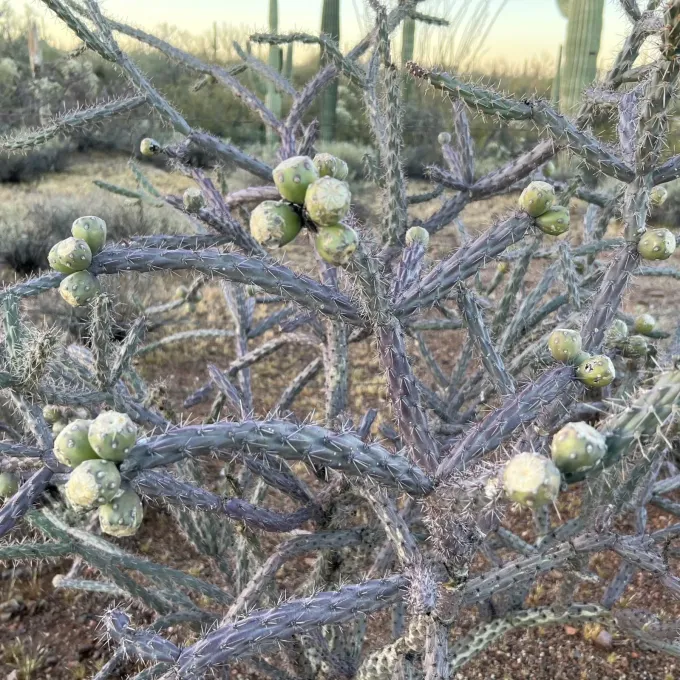
Description
Growing requirements
Cylindropuntia versicolor, commonly known as the cane cactus, is a prominent member of the Cactaceae family. It is native to the Sonoran Desert, primarily found in the southern regions of Arizona and adjacent parts of Mexico, thriving in arid shrubland environments.
The cultural requirements for this species focus heavily on drainage and light. To maintain its structural integrity and health, it must be grown in high-porosity mineral substrates. Pure garden soil or clay-rich mixtures are unsuitable, as they hold moisture for too long and induce root decay.
This plant is a true xerophyte, adapted to high solar radiation. It requires full sun exposure throughout the year to regulate its photosynthetic rate and ensure the development of its distinctive, colorful spines and variegated stem segments, which can shift from green to reddish-purple.
Regarding its botanical structure, the plant exhibits a branching habit, often reaching tree-like proportions in ideal conditions. The branches are made of easily detached segments, which is a key adaptation for vegetative propagation in the wild, allowing the plant to spread across challenging desert terrain.
The economic and ecological utility of Cylindropuntia versicolor lies in sustainable desert landscaping and land restoration. Its root structure provides significant soil stabilization, preventing erosion in regions where water scarcity prevents the growth of standard agricultural or forage crops.
Main diseases and pests
Root rot caused by Phytophthora and other soil-borne fungi is the primary threat to the longevity of the cane cactus. This condition is almost exclusively linked to overwatering or inadequate soil aeration, which prevents the roots from accessing necessary oxygen.
Mealybugs are the most persistent insect pests affecting this species. They aggregate in the junctions between the spiny nodes, making physical removal difficult. Left unchecked, their feeding reduces the plant's vigor and leads to chlorosis and stunted stem development.
In addition to pests, the plant is susceptible to mechanical damage. Although it is sturdy, the segments are brittle; high winds or animal interference can break branches. While this is natural for propagation, it creates open wounds that can serve as entry points for bacterial infections.
Controlling these threats requires a proactive approach. Chemical applications should be limited to targeted systemic treatments, applied during dry periods to ensure the chemical adheres to the surface or is absorbed without being washed away by unexpected precipitation.
Integrated pest management protocols for Cylindropuntia versicolor emphasize environmental control over chemical intervention. Ensuring consistent airflow around the plant canopy significantly reduces the likelihood of both fungal outbreaks and mite colonization in dry, arid climates.