
Cylindropuntia acanthocarpa
Cylindropuntia acanthocarpa
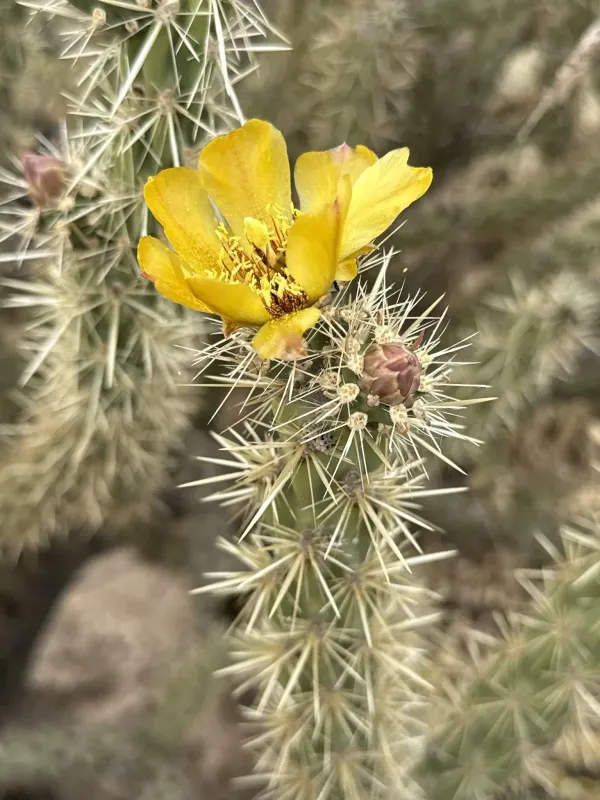
Description
Growing requirements
Cylindropuntia acanthocarpa, commonly known as the buckhorn cholla, is a prominent member of the Cactaceae family. This species typically grows as a large, branching shrub, characterized by its cylindrical stem segments covered in dense, sharp spines.
Native to the arid regions of the southwestern United States and northwestern Mexico, this plant is exceptionally well-adapted to extreme environmental conditions. It thrives in deserts where rainfall is minimal and temperatures reach significant highs.
The cultural requirements for this plant focus on providing excellent drainage and high light exposure. It thrives best in sandy or rocky soils that mimic the natural environment, preventing any potential water stagnation around the root system.
Sunlight is the most critical factor for the vigor of Cylindropuntia acanthocarpa. In cultivation, it should be placed in full sun to ensure healthy growth and to maintain the integrity of its structural form and spination.
Agrotechnical management is primarily defined by the principle of limited intervention. Irrigation should be sparse and provided only during peak growth cycles, ensuring the substrate dries completely between watering events to avoid rot.
Main diseases and pests
The primary threat to the health of this cactus is fungal infection triggered by poor drainage or excessive atmospheric moisture. Fungi can quickly compromise the roots and basal segments of the plant if conditions remain damp.
Pests such as mealybugs and scale insects represent a persistent issue for this species. These pests cluster in the joints of the stems, extracting sap and weakening the plant's structural resistance to secondary infections.
Physical injuries to the cactus surface, whether caused by wildlife or handling, serve as entry points for bacterial pathogens. Such infections can lead to rapid necrosis of the affected segments if not identified and treated early.
Effective management involves periodic inspection of the stems for signs of discoloration or pest colonies. Targeted pesticide application or manual removal of pests is recommended if infestations are spotted early in the development cycle.
Maintaining a clean growing area by removing decaying organic matter is essential for preventing the buildup of spores that cause cactus diseases. Proper airflow and space between individual plants can significantly mitigate these risks.