
Teddy bear cholla
Cylindropuntia bigelovii
Description
Growing requirements
Cylindropuntia bigelovii, commonly known as the Teddy bear cholla, is a perennial succulent belonging to the Cactaceae family. It is native to the arid desert regions of the Southwestern United States and Northern Mexico.
This species requires full sun exposure to maintain its compact growth form and density of spines. Cultivating it in low-light environments often leads to etiolation and structural weakness, which can compromise the plant's health.
The substrate must provide superior drainage; a coarse, mineral-based medium is essential. Incorporating crushed volcanic rock or perlite into the soil mix helps ensure that moisture does not remain stagnant around the roots.
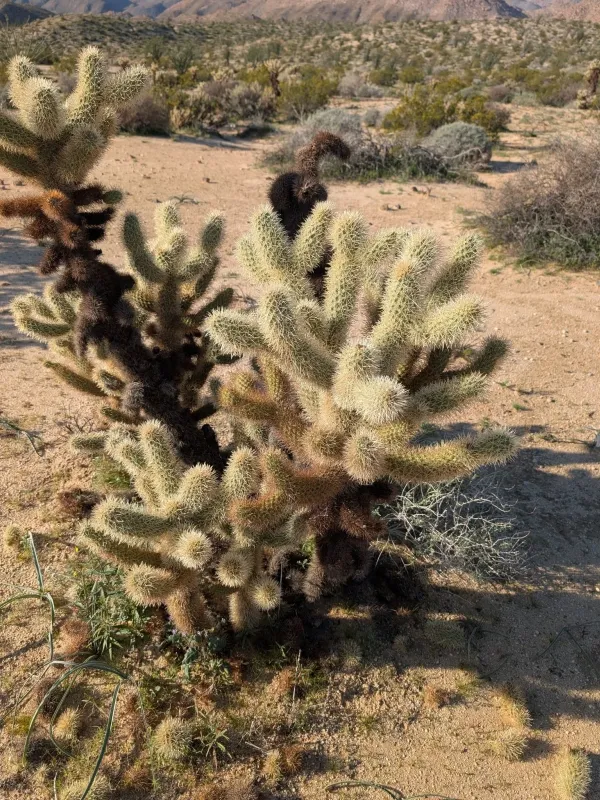
Botanically, the plant is distinguished by its light-colored, reflective spines that create a shimmering appearance. The spines are barbed, making the segments detach easily upon contact, which serves as a natural dispersal mechanism in the wild.
Watering requirements are minimal; the soil must be allowed to dry out completely between sessions. During winter months, the plant should be kept in a cooler, dry climate to mimic its natural dormancy period.
Main diseases and pests
Root rot is the most significant threat to Cylindropuntia bigelovii, typically caused by overwatering or using a medium with poor porosity. Prevention involves strict adherence to drying cycles.
Common pests include mealybugs and spider mites, which thrive in the dense spiny architecture of the stems. These pests are notoriously difficult to treat due to the protective covering of the spines.
Chemical control should involve systemic insecticides applied carefully to the base of the plant. Maintaining adequate airflow is crucial to reduce the incidence of opportunistic fungal infestations.
Physical trauma to the plant's skin often becomes an entry point for pathogens. It is recommended to handle the specimens with specialized tools to prevent both injuries to the operator and damage to the epidermis.
Regular inspection of the plant's base and the junction points of the segments is the best practice for early detection of potential threats and ensuring plant longevity.