
Cane cactus
Cylindropuntia imbricata
Description
Growing requirements
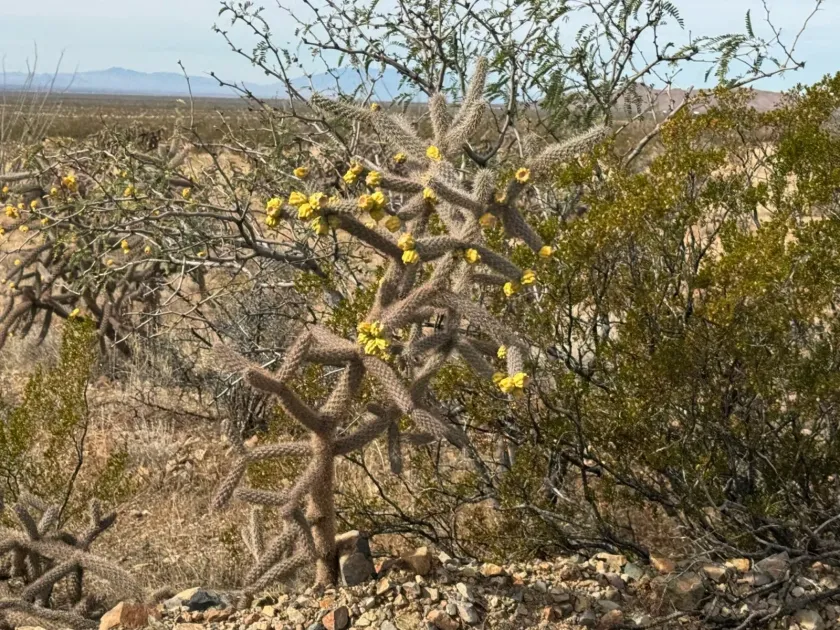
Cane cactus (Cylindropuntia imbricata) is a member of the Cactaceae family, well-known for its tree-like habit and striking cylindrical, tuberculate stem segments.
Originating from the high-desert regions of North America, this species has adapted to survive in environments characterized by extreme aridity and seasonal cold.
Agricultural success depends on selecting sites with gritty, well-drained soil, as the plant is highly susceptible to root decay if water accumulates in the root zone.
It is one of the most cold-hardy cactus species, capable of surviving significant frosts, which allows it to be cultivated in climates that would be lethal to other cacti.
Full sun exposure is non-negotiable for the healthy development of this plant, as it requires high-intensity light to maintain its structural integrity and reproductive ability.
Yield
The primary agricultural utility of this cactus lies in its potential as emergency fodder for livestock, provided the spines are removed through burning or mechanical processing.
Its fruits are edible and possess nutritional value, contributing to its status as a multipurpose crop in subsistence farming systems within arid zones.
The plant serves as an effective biological barrier or hedge, which is commonly used to enclose pastures and prevent soil erosion on steep slopes.
Sustainable harvesting of biomass involves periodic pruning, which encourages denser growth and increases the overall productivity of the cactus stand.
While not a primary commercial crop on a global scale, it remains a vital resource for soil stabilization and forage availability in harsh environmental conditions.
Main diseases and pests
The most common pests include cochineal insects, which can rapidly infest a population, and various species of spider mites that thrive in dry, dusty conditions.
Fungal pathogens such as Fusarium and various root rots pose a major threat, particularly if the crop is exposed to prolonged humidity or poor soil aeration.
Mechanical injuries resulting from careless handling can serve as entry points for pathogens, emphasizing the need for tools to be sanitized during management.
Competition from invasive weeds during the seedling stage can hinder growth, necessitating careful manual weeding to protect the developing cactus roots.
Management of these threats requires an integrated approach that prioritizes habitat modification, such as improving drainage, over chemical interventions.