
California cholla
Cylindropuntia californica
Description
Growing requirements
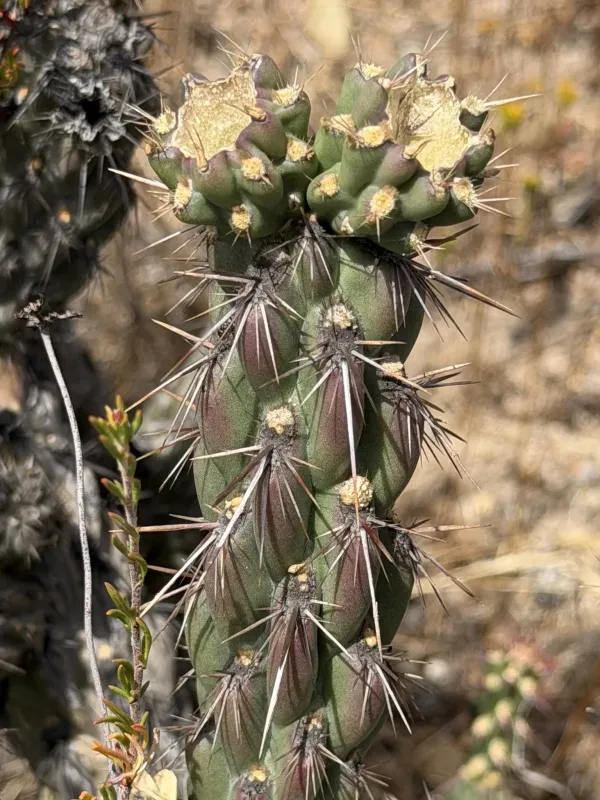
California cholla (Cylindropuntia californica) is a perennial succulent species belonging to the Cactaceae family. It is characterized by its segmented, cylindrical stems covered in sharp, barbed spines, which act as a defensive mechanism against herbivores.
Native to the arid regions of Southern California and Northern Mexico, this plant is well-adapted to environments with minimal rainfall. In cultivation, it requires a habitat that mimics its natural desert origins to thrive and maintain its structural integrity.
The culture demands full sun exposure to maintain its compact growth habit and vibrant appearance. In indoor or greenhouse settings, supplemental lighting may be necessary if natural sunlight is insufficient during the shorter days of the year.
Soil requirements are strictly focused on drainage. The ideal growing medium consists of a high percentage of inorganic material, such as coarse sand, pumice, or decomposed granite, ensuring that water passes through the roots without retention.
Agrotechnical management involves deep, infrequent watering during the growing season and a period of absolute drought during the winter months. Proper ventilation is essential to mimic the drying winds of its native habitat and to discourage moisture-related issues.
Main diseases and pests
Major pests affecting this species include mealybugs, scale insects, and spider mites. These pests typically cluster in the crevices between the stem segments, necessitating the use of systemic insecticides or manual removal with alcohol solutions.
Root rot and stem necrosis are the most common pathological issues, typically caused by overly frequent irrigation or improper soil aeration. Prevention is prioritized over treatment by maintaining strict adherence to a dry-cycle schedule during the winter dormant period.