
Echinocactus hybrids
Echinocactus hybrids
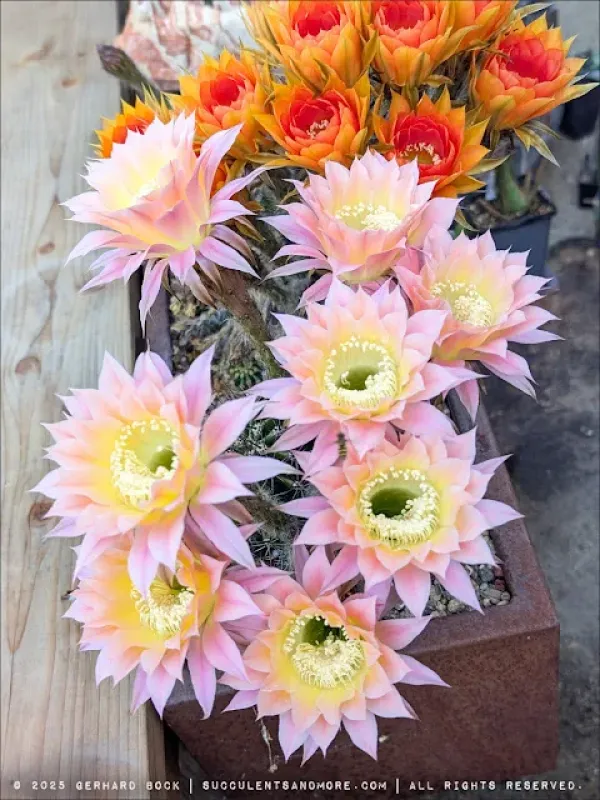
Description
Sowing dates
Propagation of Echinocactus hybrids via seeds is best performed during the spring, specifically between March and April. A stable temperature of 22–25 degrees Celsius is critical for high germination rates.
Sowing should be done in a sterilized, free-draining medium comprised of sand, perlite, and fine peat. Maintaining constant surface moisture in a small propagator is essential during the initial germination phase.
Once seedlings develop their first spines, they require gradual acclimation to lower humidity. Pricking out is necessary as soon as the young plants become crowded to ensure adequate space for root development.
Grafting is a common technique used for hybrid Echinocactus to accelerate maturation. By using vigorous rootstocks like Trichocereus, growers can achieve a saleable size in a fraction of the time compared to own-root growth.
The transition from a seedling to a robust specimen generally takes several years, requiring consistent attention to light exposure and seasonal nutrient management.
Growing requirements
Echinocactus hybrids belong to the Cactaceae family and require intense direct sunlight to maintain their characteristic globular shape. Inadequate light results in etiolation, which permanently compromises the plant's aesthetic value.
The ideal growing medium must be porous and inorganic-heavy. Incorporating grit, pumice, or gravel ensures the drainage necessary to prevent root suffocation and subsequent decay.
Irrigation should follow a strict wet-dry cycle, where the substrate dries out completely between waterings. During winter dormancy, temperatures should be dropped to 10–12 degrees Celsius with almost zero water supply.
Fertilization is best limited to the growing season using specialized low-nitrogen, high-potassium mineral blends. Excess nitrogen creates soft, disease-prone tissues that lack the resilience of naturally grown specimens.
Air circulation is vital to prevent the buildup of stagnant humidity around the crown. Good ventilation helps maintain a healthy epidermis and reduces the risk of fungal infections.
Main diseases and pests
Red spider mites are the most common pest for Echinocactus hybrids, often attacking the growth point. Their presence results in unsightly scarring, requiring prompt application of systemic acaricides.
Root rot is primarily caused by poor drainage and excessive moisture in low-light conditions. If detected early, the plant must be removed from the pot, cleaned of decayed tissue, and allowed to dry before repotting.
Mealybugs are frequently found hiding in the dense spine clusters of the cactus. Using a systemic insecticide is the most effective way to eliminate these pests without physically damaging the plant's delicate exterior.
Scale insects can attach themselves to the hardened epidermis. They are typically controlled through local treatments with insecticidal soap or specific pesticides combined with manual removal.
Prevention is the best defense against threats; keeping a clean greenhouse environment and isolating any new plants prevents the rapid spread of infestations within the collection.