
Cylindropuntia hystrix
Cylindropuntia hystrix
Description
Growing requirements
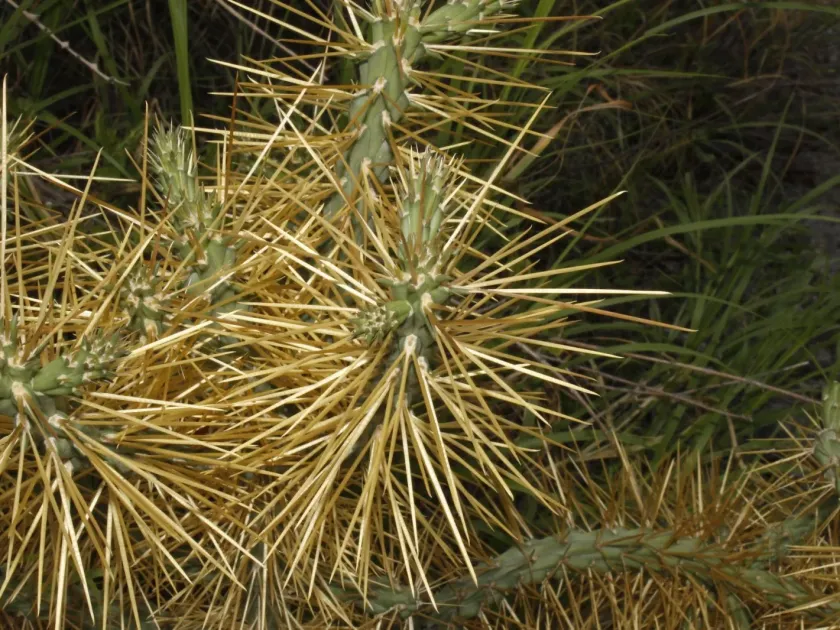
Cylindropuntia hystrix is a member of the Cactaceae family, known for its distinct cylindrical stems and formidable spines. It is native to the Caribbean, specifically found in dry, rocky habitats across Cuba, where it thrives in harsh, nutrient-poor soils.
The cultural requirements for this plant focus on high light intensity and extreme drainage. As a drought-adapted species, it requires a substrate that allows water to pass through instantly, preventing any potential root suffocation or decay.
Temperature management is crucial; the plant performs best in warm environments between 20°C and 30°C. During the dormant winter season, it must be kept dry and in a cooler environment to mimic its natural cycle, which ensures healthy growth in spring.
The potting medium must be inorganic-heavy, ideally consisting of a mixture of coarse sand, pumice, and minimal organic peat. Proper aeration of the roots is a fundamental aspect of its maintenance for long-term health.
Economically, this plant serves primarily in xeriscaping and as a protective hedge in tropical regions. Its density and spine production make it an excellent natural deterrent for pests and unwanted intruders in semi-arid landscape designs.
Main diseases and pests
The primary threats to Cylindropuntia hystrix are root rot and stem fungi, usually induced by excessive humidity or poor soil structure. Once pathogens infect the core tissues, the plant often requires surgery to excise the affected areas.
Pest infestations, particularly by mealybugs and spider mites, are common in poorly ventilated areas. These pests penetrate the waxy cuticle of the cactus, extracting fluids and weakening the plant's structural integrity.
Treatment involves the use of targeted acaricides or systemic insecticides. Application should be performed cautiously, ensuring that the chemicals reach the crevices between the areoles where pests often hide.
Environmental stress, such as sudden shifts in humidity, can also cause the skin to crack or attract sap-sucking insects. Consistent climatic conditions are the best preventative measure against these secondary stressors.
Monitoring the base of the plant for signs of softening is a vital practice for every grower. Early intervention with fungicides can save a plant that might otherwise succumb to systemic rot caused by improper soil moisture.