
Cane cactus
Cylindropuntia spinosior
Description
Growing requirements
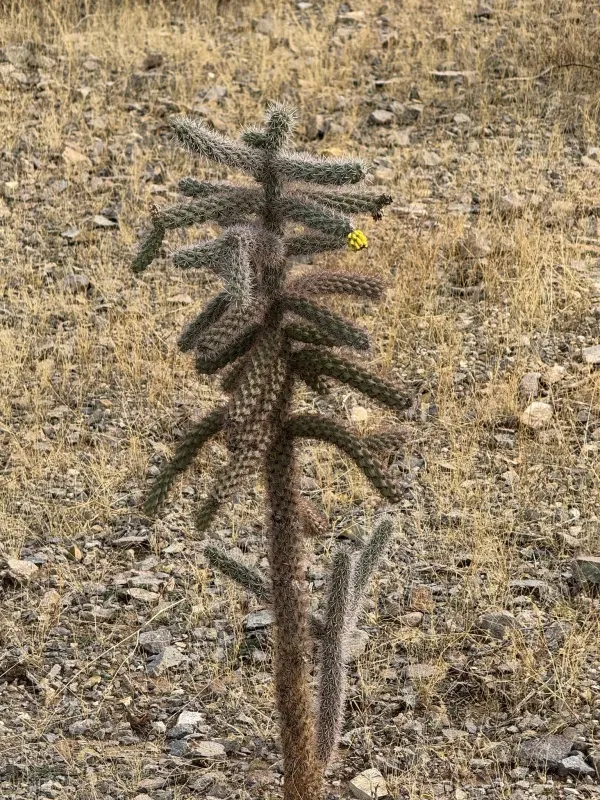
The Cane cactus (Cylindropuntia spinosior) is a perennial succulent belonging to the Cactaceae family. It is characterized by its cylindrical, segmented stems covered in dense, sharp spines, forming a shrub-like structure that can reach significant heights in its native habitat.
Originating from the arid regions of the southwestern United States and northern Mexico, this species is highly adapted to extreme environmental conditions. It thrives in high-temperature, low-rainfall environments where many other plants would struggle to survive.
The primary soil requirement for this crop is exceptional drainage. It should be grown in sandy, gravelly, or rocky soil mixes that prevent water saturation. Poorly draining soil will lead to rapid root decay, which is the most common cause of plant mortality.
Cultivation requires full sun exposure throughout the day to ensure healthy growth and structural integrity. The cactus is highly drought-tolerant, meaning it requires minimal supplemental water during the active growing season, provided temperatures are high enough to facilitate evaporation.
Proper agricultural management includes a dormant period during the winter months. During this time, water should be withheld almost entirely, and the plant should be kept in a cool, dry place to mirror its natural cycle and prepare it for spring growth.
Main diseases and pests
The most severe threats to the Cane cactus are fungal pathogens, specifically those causing root and stem rot. These diseases are almost always associated with excessive soil moisture or high humidity combined with poor air circulation.
Insect pests such as mealybugs and spider mites are frequent invaders that target the tender growth areas of the cactus. Regular monitoring of the stems and the use of insecticidal soap or specific oils are recommended to maintain plant vitality.
Harvesting
The agricultural use of this cactus is primarily decorative, often utilized in xeriscaping or rock gardens where water conservation is a priority. It is valued for its hardiness and ability to create a visually striking, textured landscape feature.
In certain environmental restoration projects, it serves as a stabilizing agent for loose, arid soils, helping to prevent erosion in harsh desert climates where traditional vegetative cover cannot be established.