
Rose cactus
Cylindropuntia rosea
Description
Growing requirements
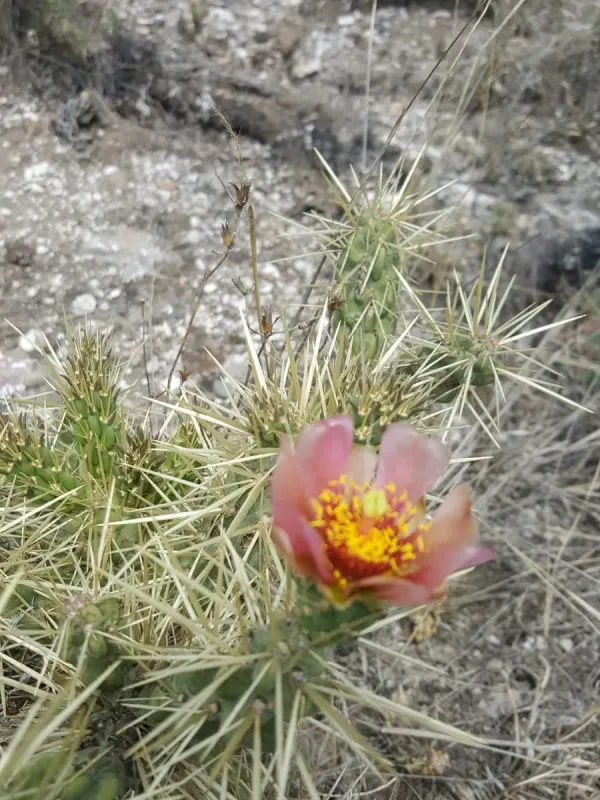
Rose cactus (Cylindropuntia rosea) is a perennial succulent belonging to the Cactaceae family. Native to the arid regions of Mexico and parts of the United States, this species is well-adapted to harsh environmental conditions with limited water availability.
The plant features distinctive cylindrical stem segments adorned with sharp spines, which act as a defense mechanism. It produces vibrant, rose-colored flowers that are highly attractive, followed by the development of characteristic succulent fruits.
Optimal growth requires high light intensity. Being a desert-adapted species, it thrives under full sun exposure. Inadequate light results in etiolation, where the stems stretch and lose their structural integrity and typical appearance.
The growing medium must be highly porous and well-draining. A mix consisting of coarse sand, perlite, and a small portion of mineral soil is recommended to prevent moisture from lingering around the roots, which is essential for healthy development.
Temperature management involves warm summer conditions for active growth and significantly cooler temperatures during winter dormancy. This temperature drop is a key requirement for the plant to successfully enter its flowering cycle.
Main diseases and pests
The primary threats to Cylindropuntia rosea are linked to improper irrigation practices. Overwatering creates anaerobic conditions in the root zone, leading to various forms of root and stem rot that are often irreversible once established.
Pest populations such as mealybugs and spider mites thrive on these cacti. Mealybugs typically hide in the crevices of the stem segments, while spider mites damage the plant's surface by sucking sap, leaving discolored patches on the skin.
Fungal infections can also be triggered by poor air circulation. Stagnant air combined with humidity provides an ideal environment for fungi to proliferate, potentially leading to surface spotting or tissue death.
Integrated pest management strategies should include regular monitoring and the judicious use of horticultural oils or systemic insecticides when infestation levels exceed acceptable thresholds.
Effective prevention strategies include keeping the plant in a well-ventilated area and ensuring the substrate dries out completely between waterings, which helps maintain the plant's natural resistance to opportunistic infections.