
Cylindropuntia echinocarpa
Cylindropuntia echinocarpa
Description
Growing requirements
Cylindropuntia echinocarpa, commonly known as the golden cholla, is a perennial shrub-like succulent belonging to the Cactaceae family. It is native to the arid environments of the Southwestern United States and Northern Mexico, primarily flourishing in the Mojave and Sonoran deserts.
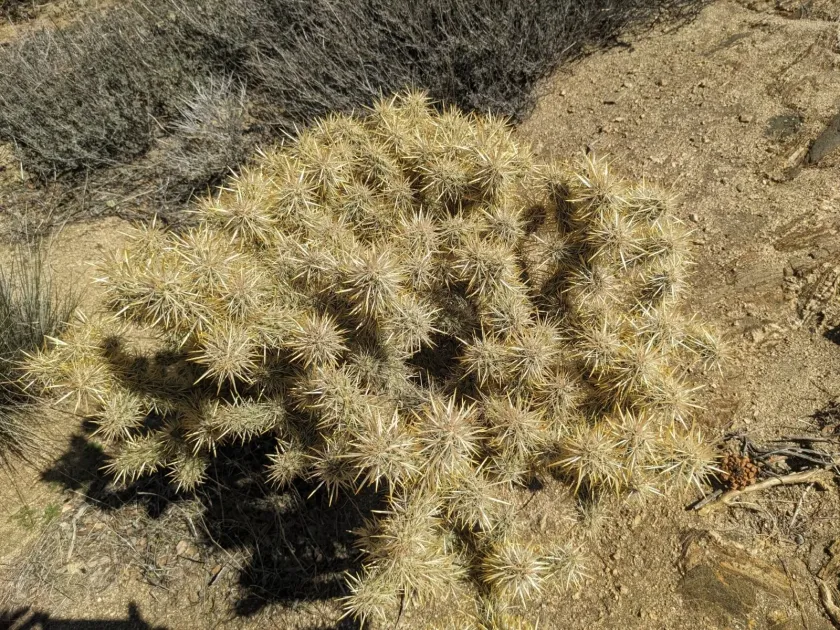
The plant is distinguished by its heavily branched stems composed of cylindrical segments, which are densely covered in sharp, formidable spines. During its blooming season in the spring, it produces attractive yellow-green or brownish flowers at the tips of its branches.
This species has strict light requirements; it demands full, direct sun exposure throughout the day to sustain its structural integrity and physiological health. Insufficient sunlight will cause etiolation and render the plant susceptible to structural collapse.
The growing medium must offer exceptional drainage and aeration, mimicking the rocky or sandy soils of its native habitat. A neutral to slightly alkaline pH is ideal, and standing water must be strictly avoided to prevent root asphyxiation.
Cylindropuntia echinocarpa is highly adapted to extreme temperature fluctuations characteristic of desert climates. During the winter, it can survive periods of frost, provided that both the ambient air and the soil remain exceptionally dry.
Main diseases and pests
The most significant risks to the cultivation of this species arise from improper irrigation management, which often triggers severe root and stem rot. Excess moisture, especially in cooler conditions, leads to rapid decay of the plant's succulent tissues.
In terms of pests, mealybugs and spider mites are the primary threats. These organisms thrive in low-humidity environments and can rapidly proliferate on the plant if proper ventilation is not maintained in greenhouse or container settings.
Occasionally, the plant may be infested by scale insects, which feed on the sap and significantly compromise the plant's overall vigor. Systemic insecticides are recommended for effective control when infestations occur.
The plant is also susceptible to various fungal pathogens, including Fusarium, which presents as necrotic spots on the stem segments. Prevention is largely based on maintaining strict sanitation of horticultural tools and avoiding overcrowded planting.
Mechanically induced wounds are a major pathway for bacterial infections. Pathogens exploit breaks in the epidermis to invade the vascular system, resulting in soft rot that can quickly decimate the entire plant if left untreated.