

Disease
Especially harmful
Shot hole disease
Clasterosporium carpophilum
Description
Symptoms
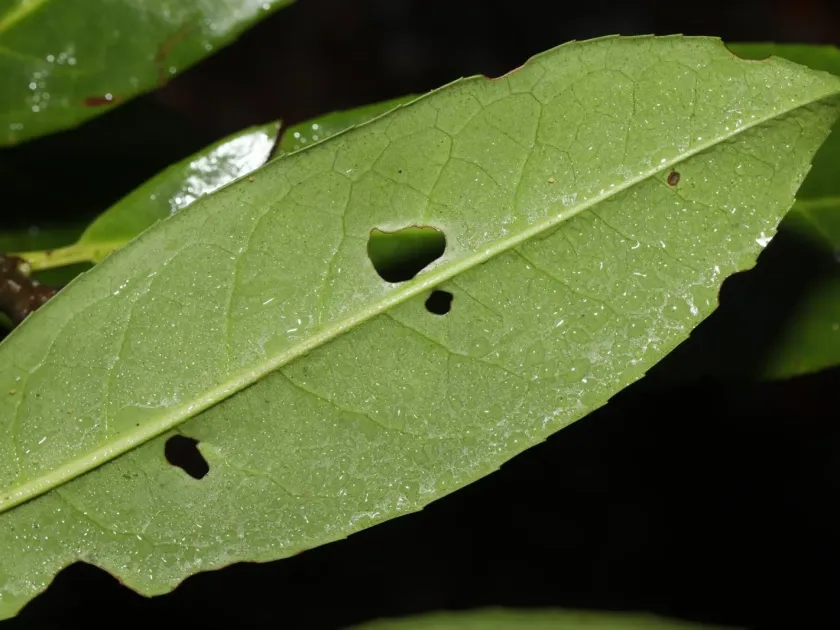
The primary symptom of shot hole disease is the appearance of small, circular spots on leaves, which gradually turn reddish-brown. Eventually, the necrotic tissue falls out, leaving distinctive holes in the leaves, which is why the disease is commonly called shot hole.
On young shoots, the infection manifests as reddish-brown spots that develop into deep, sunken lesions or cankers. These lesions often cause gumming, where the tree exudes sticky resin, significantly weakening the affected branches and reducing tree vigor.
Infected fruits display small, depressed red spots that often evolve into shallow lesions. As the fruit develops, these spots can cause fruit deformation, resulting in reduced quality and marketability, making the fruit unsuitable for consumption or commercial sale.
Buds are also highly susceptible to the pathogen; they often turn black, appear shiny as if varnished, and frequently fail to open in the spring. This bud blight significantly reduces the potential canopy density and the tree's ability to produce flowers and fruit.
Heavy infection levels can lead to the widespread shedding of flowers and young fruit, causing massive harvest losses. The tree is left physically compromised, showing reduced foliage and an overall stunted appearance, making it less resilient to environmental stressors.
Pathogen
The disease is caused by the fungus Clasterosporium carpophilum, a specialized pathogen that primarily infects stone fruit trees such as peaches, nectarines, apricots, and cherries. It is a persistent parasite that thrives in moist temperate climates.
The pathogen overwinters as mycelium within infected shoots, bark crevices, and old lesions on the tree. With the arrival of warm, damp weather in the spring, the fungus resumes activity, producing masses of conidia ready to infect new plant tissues.
Spore production is prolific, and conidia are easily dispersed by wind, splashing rain droplets, and occasionally by insects. This ability to spread rapidly makes the disease highly contagious in orchards during wet spring periods.
Upon landing on a susceptible plant organ, the spores germinate and penetrate the tissue through natural openings or small wounds. The incubation period is typically short, allowing for multiple infection cycles throughout the growing season under favorable conditions.
The fungus exhibits high adaptability and can survive in orchard debris for extended periods. Its ability to infect multiple parts of the host tree ensures its presence even after standard maintenance procedures have been performed.
Conditions for development
Shot hole disease thrives in high-humidity environments and is strongly correlated with frequent rainfall. Wet spring weather, characterized by fog and long-lasting dampness on leaf surfaces, is the most critical period for disease initiation.
While the pathogen prefers temperatures between +18 and +25 degrees Celsius, it remains active in a wide range of climates. Cool, wet springs often exacerbate the problem, providing prolonged periods for spore germination and colonization.
Orchards with poor air circulation, often due to high-density planting or lack of proper pruning, provide the perfect habitat for the fungus. When foliage remains wet for extended periods, the risk of infection increases dramatically.
Improper fertilization practices, specifically the overuse of nitrogen, can result in excessively succulent shoot growth. These tender, nutrient-rich tissues are highly susceptible to fungal penetration compared to more mature, hardened plant tissues.
Inadequate orchard sanitation contributes to the buildup of inoculum. If infected leaves and pruned branches remain on the ground or in the canopy, they act as a constant source of new spores for the next generation of leaves and shoots.
Why it matters
By severely damaging leaves, the pathogen restricts the tree's ability to perform photosynthesis, leading to reduced carbohydrate storage. This weakened state results in poor winter hardiness and increased susceptibility to winter damage.
Cankers on shoots can girdle branches, restricting the transport of water and nutrients, which often leads to the dieback of entire limbs. Repeated infections over several years can deplete the tree's energy reserves, leading to premature mortality.
Economic damage is substantial, as fruit losses can exceed 50% in heavy outbreaks. Beyond direct fruit loss, the need for increased fungicide applications and intensive labor for pruning and sanitation adds significant operational costs to fruit production.
The presence of lesions provides entry points for secondary pathogens, such as bacterial canker or wood-rotting fungi. This complex of infections makes the trees increasingly difficult to manage and effectively shortens the productive lifespan of the orchard.
In nurseries, shot hole disease is devastating as it renders young saplings unmarketable and weakens their development. The loss of potential stock is a significant blow to orchard expansion and restoration efforts.
Protection
The cornerstone of management is strict orchard hygiene, including the removal of all infected wood and dead branches during winter pruning. All tools should be disinfected between cuts to prevent spreading the fungus.
Removing and destroying fallen leaves is essential, as this material harbors the overwintering spores. Clearing the orchard floor in late autumn effectively reduces the primary inoculum load for the following season.
Dormant season sprays, particularly those containing copper-based compounds, are highly effective in suppressing early fungal development. Applying these treatments just before bud break serves as a critical defensive barrier.
During the growing season, a regular schedule of systemic fungicides is recommended to maintain protection during wet weather. Rotating different chemical classes is vital to prevent the pathogen from developing fungicide resistance.
- Implement proper pruning to ensure canopy air circulation.
- Apply balanced phosphorus and potassium fertilization.
- Select resistant cultivars for new orchard plantings.
- Promptly remove and dispose of infected mummified fruit.
Content graph
Connections · Shot hole disease
Most often together:
Marketplace
Products · 191








Community
Discussion
No discussions yet — be the first.