


SKU #4125
·
1 115 views
Golden Jubilee
Peach
User rating
3 votes67% positive reviews
No ratings yet — be the first.
Tree Growth Type
Tall
Fruit Weight
150
Fruit Shape
Oval
Fruit Color
Yellow
Prices in stores
from2.89 €per seedling
pack from 2.3 € per pack
12 offers from 11 stores
Store offers · 12 from 11 stores
Prices are updated on loadLoading offers…
Available at: AgronomVIP · Botanicmarket · Florium · КиївСад · LeafLand · Райська Долина · Sadovnik-sam · Sadpavliuka · Saduua · Плодопитомник Сад · TataSad · Василь Іванович · Веснодар
Aggregator catalog: prices are collected automatically from store websites, normalized by AI and converted at the current exchange rate. Before ordering, confirm the price and availability on the store's website. This block is not indexed by search engines — the data is loaded after the page opens.
About product

Elberta from Greensboro. Introduced in the USA in 1921. Included in the State Register of the North Caucasus region in 1947. Medium-sized trees, vigorous growers, with a broad, spreading canopy. Flowers are bell-shaped. Large fruits — 140 g, broadly oval in shape. The ventral suture is medium, deepening towards the apex. The apex has a groove-like depression. The cavity is deep and narrow. The ap…
Tree Growth Type
Tall
Fruit Weight
150
Fruit Shape
Oval
Fruit Color
Yellow
Description
Elberta from Greensboro. Introduced in the USA in 1921. Included in the State Register of the North Caucasus region in 1947.
Medium-sized trees, vigorous growers, with a broad, spreading canopy. Flowers are bell-shaped.
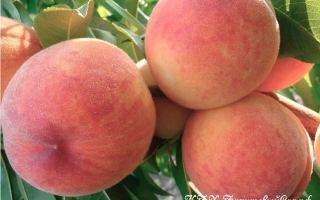
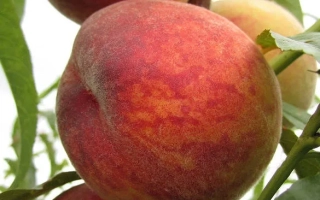
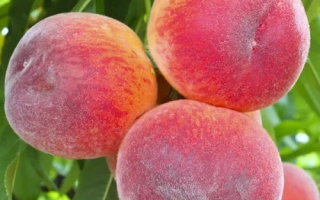
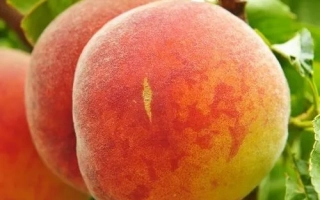
Large fruits — 140 g, broadly oval in shape. The ventral suture is medium, deepening towards the apex. The apex has a groove-like depression. The cavity is deep and narrow. The apex is rounded. The skin is medium density, medium pubescence, golden-yellow with a large dark carmine blush. The flesh is bright orange, pink near the pit, fibrous, sweet, with a slight acidity. The pit is medium-sized, separates easily from the flesh. Fruits are dessert-type, ripen in the first decade of August, contain 9.50% dry matter, 7.5% sugars, 0.87% acids, and 9.24 mg/100g ascorbic acid. Fruits are transportable and can be stored for 6-8 days.
Enters fruiting on the 3rd-4th year. High yield, up to 200 centners/ha, 89.7 centners/ha from 1983 to 2000. High winter hardiness of generative buds. Good resistance to fungal diseases.
Video · 9 videos
Suggest a video →Crop & resistance
Crop
Disease resistance
Specifications hover over for a hint about the specification
| Tree Growth Type | |
|---|---|
|
Fruit Weight
Fruit Weight
Tomato fruits are classified by weight as: very small — less than 20 grams; small — 20 — 50 grams; medium — 50 — 100 grams; large — 100 — 200 grams; very large — more than 200 grams. |
150 |
|
Fruit Shape
Fruit Shape
Modern tomato varieties have a diverse fruit shape: flat, flat-round, round, oval, elongated-oval, pear-shaped, plum-shaped, cube-shaped, and cylindrical. On poorly fertile soils and under unfavorable growing conditions, tomato fruits may take on a more rounded shape. |
|
|
Fruit Color
Fruit Color
The fruit color of tomato varieties is influenced by the combination of skin and flesh color. Some varieties have transparent skin, others — yellow. When combined differently, the fruits can acquire quite diverse colors. The fruit color is affected by pigments (lycopene) and thei... |
|
| Flavor of the fruit | |
| Core | |
| Meat | |
| Yield (kg/tree) | 50 |
| Tree Height | 2 |
| Cold tolerance (°C) | |
| Fruiting (year after planting) | 2 |
| Storage Duration (days) | 7 |
| Features | |
| Registration year | 1954 |
| Catalog | Catalog → Peach |
| Country | Ukraine |
Not yet комментариев. Be the first!
Alternatives
Peach saplings · similar varieties





See also
Often considered together with this variety



Recently viewed
Products you’ve viewed on this site
Reviews · 0