


SKU #3806
·
1 128 views
Iput
Cherry, Sour Cherry
User rating
2 votes50% positive reviews
No ratings yet — be the first.
Type of Sort
Cherry
Store offers · 6 from 6 stores
Prices are updated on loadLoading offers…
Available at: 1sad · AgroMisto · AgronomVIP · Drevolaz · Райська Долина · Saduua · Плодопитомник Сад
Aggregator catalog: prices are collected automatically from store websites, normalized by AI and converted at the current exchange rate. Before ordering, confirm the price and availability on the store's website. This block is not indexed by search engines — the data is loaded after the page opens.
About product

3-36 x 8-14. Cultivar developed at the All-Russian Institute of Lupin. Breeders: M.V. Kanshina, A.I. Astakhov. Introduced into the State Register in 1993 for the Central and Central Chernozem regions. Medium-sized tree with a broad-pyramidal, well-leafed crown. Bud is large, vegetative conical, moderately deviated, generative egg-shaped. Leaf is elongated-egg-shaped, large, dark green, apex stron…
Type of Sort
Cherry
Description
3-36 x 8-14. Cultivar developed at the All-Russian Institute of Lupin. Breeders: M.V. Kanshina, A.I. Astakhov. Introduced into the State Register in 1993 for the Central and Central Chernozem regions.
Medium-sized tree with a broad-pyramidal, well-leafed crown. Bud is large, vegetative conical, moderately deviated, generative egg-shaped. Leaf is elongated-egg-shaped, large, dark green, apex strongly pointed, base rounded, double-toothed, blade slightly concave, wavy, glabrous. Petiole short or medium, thick, pigmented, has 2-3 large colored glands. Inflorescence has 3-4 flowers, large, corolla saucer-shaped, petals touching, white, stigma level with stamens, calyx narrow-bowl-shaped, toothed sepals absent, stamens and stigma long. Fruits borne on cluster branches.
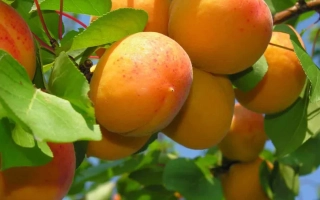
Fruit with average mass 5.3 g, maximum 9.7 g, fruit height 21 mm, width 22 mm, thickness 20 mm, shape obtuse-heart-shaped, narrow cavity, rounded apex with white spot, color dark-red, nearly black at full maturity, flesh and juice dark-red, medium-firm flesh. Pedicel short, thick. Stone egg-shaped, mass 0.27 g, 5.1% of fruit mass, light-brown, apex pointed, base rounded, detaches from flesh moderately. Fruits are attractive, juicy, sweet, taste 4.5 points, detach easily from pedicel, partially crack in wet years, versatile use, contain 16.6% dry matter, 11% sugars, 0.5% acids, 11.5 mg/100g ascorbic acid.
Flowering and ripening are early. Begins fruiting at 4-5 years. Average yield 73 c/ha, maximum 146 c/ha.
Self-sterile. Best pollinators — Revna, Tyutchevka, Raditsa, Bryanskaya Rozovaya, Ovstuzhenka. Good winter hardiness. Tree damage after severe winters did not exceed 0.6 points, flower buds — 21%, stigmas after spring frosts — 60%. High resistance to fungal diseases.
Advantages of the cultivar: regular yield, high winter hardiness of flower buds, resistance to fungal diseases, early ripening, dense fruit flesh.
Video · 10 videos
Suggest a video →Crop & resistance
Crop
Disease resistance
Specifications
| Type of Sort | |
|---|---|
| Catalog | Catalog → Cherry, Sour Cherry |
Not yet комментариев. Be the first!
Alternatives
Cherry saplings · similar varieties


See also
Often considered together with this variety



Recently viewed
Products you’ve viewed on this site
Reviews · 0