


SKU #4247
·
487 views
Timiryazev Memory
Plum
User rating
0 votes0% positive reviews
No ratings yet — be the first.
Type of Sort
Home Drain
Prices in stores
from3.23 €per seedling
pack from 3.33 € per 1 pcs
6 offers from 5 stores
Store offers · 6 from 5 stores
Prices are updated on loadLoading offers…
Available at: Agro-landing · Агростор · AgronomVIP · biolocus-plant-pro · Сад от А до Я · Agromir
Aggregator catalog: prices are collected automatically from store websites, normalized by AI and converted at the current exchange rate. Before ordering, confirm the price and availability on the store's website. This block is not indexed by search engines — the data is loaded after the page opens.
About product

This variety was obtained at the All-Russian Selection and Technology Institute of Horticulture and Nursery from crossing Victoria x Red Early. Breeders: V.A. Efimov, Kh.K. Enikeev, S.N. Satarov. Introduced into the State Register in 1959 for the Central and Volga regions. Medium-sized tree. Round, bushy crown, moderate density and leafiness. Shoots light brown, hairy. Buds slightly smaller than…
Type of Sort
Home Drain
Description
This variety was obtained at the All-Russian Selection and Technology Institute of Horticulture and Nursery from crossing Victoria x Red Early. Breeders: V.A. Efimov, Kh.K. Enikeev, S.N. Satarov. Introduced into the State Register in 1959 for the Central and Volga regions.
Medium-sized tree. Round, bushy crown, moderate density and leafiness. Shoots light brown, hairy. Buds slightly smaller than average, slightly deviated from shoots. Leaf blade inversely egg-shaped, size (length x width) — 38.3 cm², light green color, medium thickness, slightly wrinkled surface, no hairs on top, hairs present on underside, margin single-toothed. Petiole medium length, has glands. Petals not closed, number of stamens 21, stigma positioned above stamens, ovary naked, calyx cup-shaped, pedicel medium length, hairy. Blooms and fruits on one-year shoots and flower clusters.
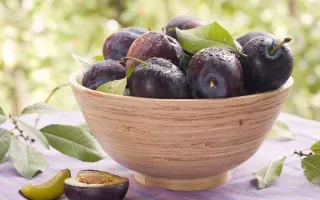
Fruit egg-shaped, weighing 22 g, main color yellow, covering has appearance of red blush with red subcutaneous dots concentrated on sun-exposed side of fruit. No hairs, weak waxy coating. Apex and base shapes oval, ventral suture weakly developed. Fruit appearance good. Flesh yellow, fine-grained texture, high density, moderate juiciness. Sugar content and aroma of flesh moderate. Taste rating 4.2 points. Chemical composition of skin and flesh: dry matter content — 15%, free acids — 1.4%, sugars — 9.3%, ascorbic acid — 11 mg/100g. Pedicel length medium. Stone oval, weight 1 g, constitutes 5.5% of fruit weight. Fruit detachment from pedicel dry. Transportability high. Variety of general-purpose use.
Flowering period May 13–22, ripening period August 28 — September 3. Age of fruiting onset 4 years. Plant longevity 21 years. Self-fertile. Yield above average. Average yield over the last 16 years — 9 kg/tree. Fruit production not sharply periodic (5 low-yield years out of last 16). Winter damage to shoots above average, branches and flower buds moderate. Drought resistance moderate. Susceptibility to diseases (clasterosporiosis and fruit rot) low (0–1.5 points), to pests moderate (2.5–3 points). Suitable for commercial and intensive cultivation.
Advantages of the variety: good fruit quality, self-fertility, good regenerative capacity.
Disadvantages: insufficient winter hardiness, strong susceptibility to mites.
Video · 2 videos
Suggest a video →Crop & resistance
Crop
Disease resistance
Specifications
| Type of Sort | |
|---|---|
| Catalog | Catalog → Plum |
Not yet комментариев. Be the first!
Alternatives
Plum saplings · similar varieties


See also
Often considered together with this variety


Recently viewed
Products you’ve viewed on this site
Reviews · 0