
Description
Symptoms
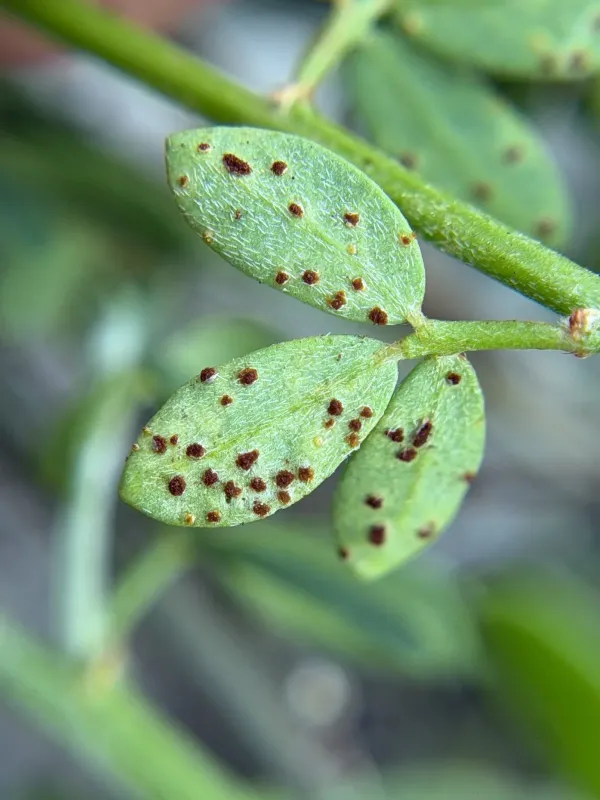
The initial appearance of pea rust is characterized by small, yellowish, or pale spots appearing on the undersides of leaves and stems of the host plant.
As the infection progresses, these spots develop into raised, powdery pustules filled with rust-colored urediniospores that easily rub off upon contact.
Over time, the pustules darken, turning dark brown or black as the fungus matures and shifts into its telial stage, marking the end of the seasonal infection cycle.
Heavy infections result in chlorosis, drying, and premature shedding of foliage, which dramatically reduces the photosynthetic capacity of the pea crop.
In severe cases, stems and pods also become covered in pustules, leading to stunted growth, distorted pods, and significant yield reduction.
Pathogen
Pea rust is caused by the obligate fungal pathogen Uromyces pisi, a member of the Basidiomycota phylum that requires a specific life cycle to survive.
The fungus is heteroecious, meaning it requires two unrelated hosts to complete its life cycle: typically Euphorbia species (spurge) and the pea plant.
Primary infections often originate from spores produced on the overwintering spurge plants, which then disseminate to infect pea crops during the growing season.
Once established on the pea plant, the fungus produces urediniospores, allowing it to spread rapidly through the field via wind-borne dispersal.
The cycle concludes with the production of teliospores, which allow the fungus to persist in plant debris or on alternative hosts throughout the winter period.
Conditions for development
Pea rust development is highly dependent on humidity, with frequent rain or prolonged morning dews providing the moisture required for spore germination.
Temperatures ranging between 15°C and 22°C are considered optimal for the rapid spread and colonization of the fungus on susceptible pea tissues.
Planting density plays a crucial role, as overcrowded stands reduce airflow and maintain high humidity levels within the canopy, facilitating disease outbreaks.
Warm, wet summers significantly favor the spread of the disease, allowing the fungus to progress from a few isolated plants to a field-wide epidemic.
The proximity of wild spurge (Euphorbia) populations near pea fields serves as a constant inoculum source, increasing the severity of early-season rust infection.
Why it matters
The economic impact of pea rust is primarily observed through a decrease in grain yield, as the disease robs the plant of essential nutrients during pod filling.
Affected plants often produce fewer, smaller, and shriveled seeds, which negatively impacts both the commercial market value and the potential germination rate.
The premature loss of the leaf area forces the plant to shut down its vital metabolic processes, resulting in uneven ripening and harvest difficulties.
Weakened plants are significantly more susceptible to opportunistic secondary pathogens, which can lead to further crop degradation and quality loss.
Protein content in the seed can be notably reduced under high disease pressure, lowering the nutritional value for livestock feed or human consumption.
Protection
Management strategies begin with spatial isolation, keeping pea fields at a significant distance from weeded areas containing spurge, the fungus's alternate host.
Implementing a strict crop rotation program helps minimize the buildup of fungal spores in the soil, preventing year-over-year infection cycles.
Using resistant or tolerant pea cultivars is the most effective long-term method to mitigate the impact of rust in regions where the disease is endemic.
Foliar application of fungicides, such as triazoles or strobilurins, is recommended when early symptoms are spotted, especially during wet growing seasons.
- Deep plowing to bury infected plant residues and prevent overwintering.
- Ensuring proper row spacing to optimize airflow within the crop canopy.
- Monitoring fields regularly to initiate chemical control at the first onset of disease.
Content graph
Connections · Pea rust
Most often together:
Marketplace
Products · 44












Community
Discussion
No discussions yet — be the first.