
Description
Symptoms
Early symptoms appear as small, chlorotic, or yellow spots on the upper leaf surface, where initial infection structures develop.
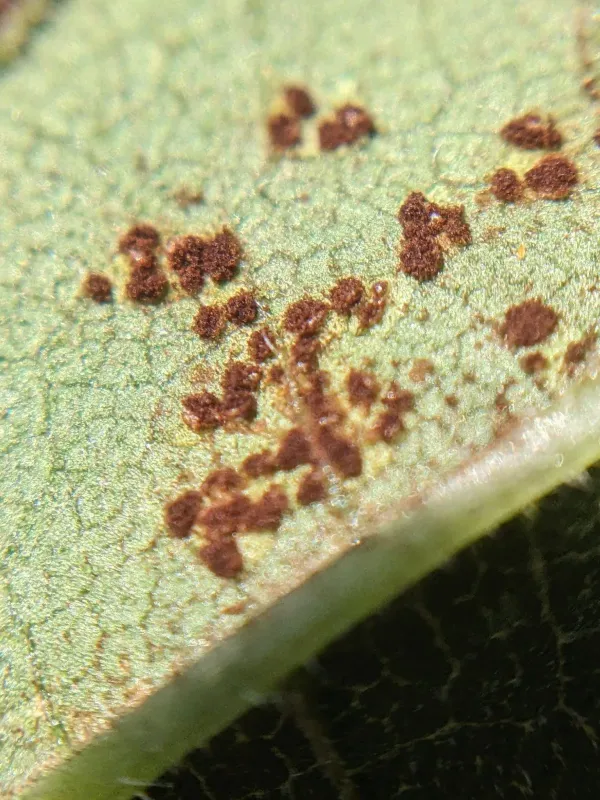
The most diagnostic feature is the presence of cinnamon-brown, raised pustules (uredinia) on the underside of the leaves.
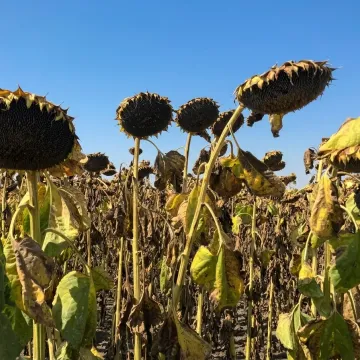
As the season progresses, these pustules can merge and also appear on stems, petioles, and even on the back of the sunflower head.
Late in the season, the pustules turn dark brown or black as they produce teliospores, marking the transition to the survival stage of the fungus.
- Premature leaf senescence and death.
- Reduced water-use efficiency of the plant.
- Overall loss of plant vigor and biomass.
Pathogen
Sunflower rust is caused by the obligate fungal pathogen Puccinia helianthi, which is host-specific to cultivated and wild sunflowers.
The fungus is macrocyclic, meaning it completes its life cycle—producing all five spore stages—on a single host plant species.
It overwinters primarily as teliospores on crop residues left on the soil surface, ensuring the pathogen remains in the field for the next season.
The disease spreads via wind-borne urediniospores, which can be dispersed over long distances under favorable atmospheric conditions.
The rapid evolution of new physiological races of the fungus poses a significant challenge for plant breeders developing resistant sunflower varieties.
Conditions for development
High relative humidity and warm temperatures (ranging from 15°C to 25°C) are the primary triggers for rust development and spore germination.
Extended periods of leaf wetness, such as those caused by dew, light rain, or fog, are essential for the infection process to occur.
Dense plant populations limit airflow within the canopy, creating a humid microclimate that accelerates the spread of the fungus.
High nitrogen application rates can make tissues more succulent and susceptible to rapid fungal colonization during the mid-to-late growth stages.
Optimal environmental conditions can lead to multiple infection cycles within a single growing season, potentially resulting in an epidemic.
Why it matters
Sunflower rust can cause severe yield losses, with reductions reaching up to 50% in cases of early and widespread infection.
The pathogen drains nutrients and energy from the plant, leading to smaller seeds and significantly lower oil content in the achenes.
Due to extensive leaf destruction, the plant's ability to photosynthesize is severely impaired, limiting the filling of the seed head.
Plants affected by rust often exhibit premature maturity and uneven seed filling, which complicates harvesting and processing operations.
The economic impact is exacerbated by the cost of chemical control measures and the reduced market value of the low-quality, damaged harvest.
Protection
The primary control method is the deployment of commercial sunflower hybrids that carry genetic resistance to prevalent rust races.
Integrated pest management involves deep tillage or incorporation of crop residues to promote the decay of overwintering fungal spores.
Strict crop rotation, keeping a distance of at least 6 years between sunflower crops on the same field, helps prevent the buildup of inoculum.
Fungicide applications are recommended when early detection of pustules occurs, typically using systemic products like triazoles or strobilurins.
Regular field scouting starting at the V4-V6 growth stage is crucial for identifying infection foci and initiating timely protective measures.
Content graph
Connections · Sunflower rust
Most often together:
Marketplace
Products · 1183



















Community
Discussion
No discussions yet — be the first.