
Disease · fungal · affects Avocado, Coconut palm, Common hazel
Especially harmful
Mycosphaerella spot
Mycosphaerella punctiformis
Description
Symptoms
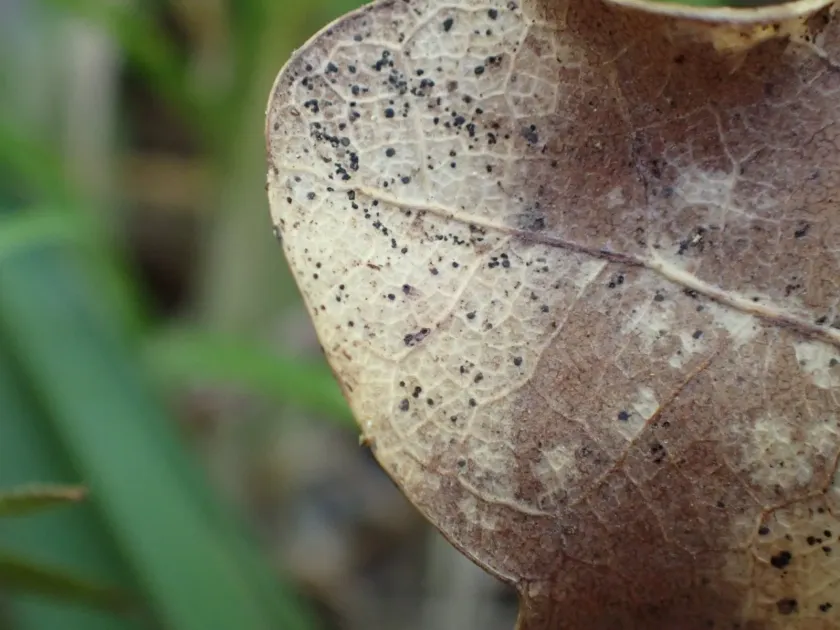
Initial symptoms include small, scattered spots on the leaf surface. As the infection progresses, these spots may change color from light brown to dark brown or black.
A key diagnostic feature is the appearance of tiny black dots in the center of the lesions, representing the fungal fruiting bodies (pycnidia or perithecia).
When the infection is severe, the lesions coalesce, covering a large area of the leaf blade, which leads to premature chlorosis and leaf necrosis.
In crops like grapevines or raspberries, the disease can also affect petioles and young shoots, weakening the plant's overall structure and growth.
Under high humidity, a faint fungal growth may be visible on the underside of the leaves, indicating the active production of conidia or spores.
Pathogen
The disease is caused by the ascomycete fungus Mycosphaerella punctiformis. This microscopic pathogen acts as a hemibiotroph, affecting the foliage of various woody and shrub plants.
The fungal life cycle involves the formation of perithecia on fallen leaves, where the pathogen overwinters. In spring, under humid conditions, ascospores mature and are dispersed by wind to infect fresh foliage.
The pathogen has a wide host range, including crops such as coconut palm, hazelnut, liquidambar, avocado, plane tree, red raspberry, and cultivated grapevine.
The fungus penetrates leaf tissues through stomata or mechanical injuries, initiating necrosis and gradually destroying the host's photosynthetic tissues.
Classified under the order Capnodiales, this fungus is highly adapted to surviving on the leaf surface and within leaf litter, making it a persistent threat in many agricultural settings.
Conditions for development
High humidity and prolonged periods of rainfall or heavy dew are the most critical factors for the rapid development of the disease.
Moderate temperatures during spring and early summer provide an optimal environment for spore germination and successful colonization of the host tissue.
Densely planted orchards or lack of proper canopy pruning create a microclimate with poor aeration, which is ideal for the accumulation of the pathogen.
Plants under stress, whether from drought, nutrient deficiency, or pest pressure, show higher susceptibility to Mycosphaerella punctiformis infections.
The presence of significant amounts of decaying leaf debris on the ground serves as a reservoir for the fungus, leading to recurring outbreaks in following seasons.
Why it matters
The primary damage results from premature leaf drop, which significantly reduces the photosynthetic capacity of the plant during the critical growth phase.
This loss of foliage impairs nutrient storage, lowering the plant's winter hardiness and leaving it vulnerable to other environmental stresses.
In fruit-bearing crops like hazelnuts or grapes, the disease can lead to reduced yields and inferior fruit quality due to insufficient energy allocation.
Prolonged infections can cause terminal shoot dieback and general exhaustion of woody plants, potentially shortening their productive lifespan.
Economic losses are cumulative, arising from reduced marketable harvest and the necessity for costly fungicide applications and canopy management.
Protection
The most fundamental cultural control measure is the thorough removal and destruction of fallen leaves, which harbor the primary inoculum of the fungus.
Proper pruning and thinning are essential to maintain an open canopy structure, ensuring better airflow and quicker drying of the foliage after rain.
Applying copper-based fungicides or systemic products containing triazoles or strobilurins is recommended during periods of high infection risk.
Maintaining a balanced fertilization program, specifically avoiding excessive nitrogen and ensuring adequate potassium levels, helps strengthen leaf cell walls.
Regular monitoring of the plantation is vital for the early detection of symptoms, allowing for timely intervention before the disease becomes widespread.
In brief
7
Affects crops
Biology
Pathogens and affected parts
Pathogens
Mycosphaerella punctiformis· fungus
Bipolaris sorokiniana· fungus
Cochliobolus sativa· fungus
Pestalotia· fungus
Pestalotia adusta· fungus
Phyllachora gratissima· fungus
Phyllosticta micropuncta· fungus
Phyllosticta perseae· fungus
Discohainesia oen· fungus
Hainesia lythri· fungus
Mycosphaerella· fungus
Phyllosticta· fungus
Affected plant parts
leaf
Content graph
Affects crops · 7
Content graph
Connections · Mycosphaerella spot
Most often together:
Weeds
1 contact
Marketplace
Products · 2686
All 2686
Wheat 843
Cucumber 380
Tomato 350
Barley 219
Sunflower 102
Soybean 93
Fungicides 77
Pepper 67
Triticale 66
Rose 62
Potato 49
Sorghum 36

Pink Lady F1 / Pink Girl F1
Seminis Vegetable Seeds
Tomato
19
8
·
12K
5 offers
11.22 €per 1000 seeds
Buy














Community
Discussion
No discussions yet — be the first.