

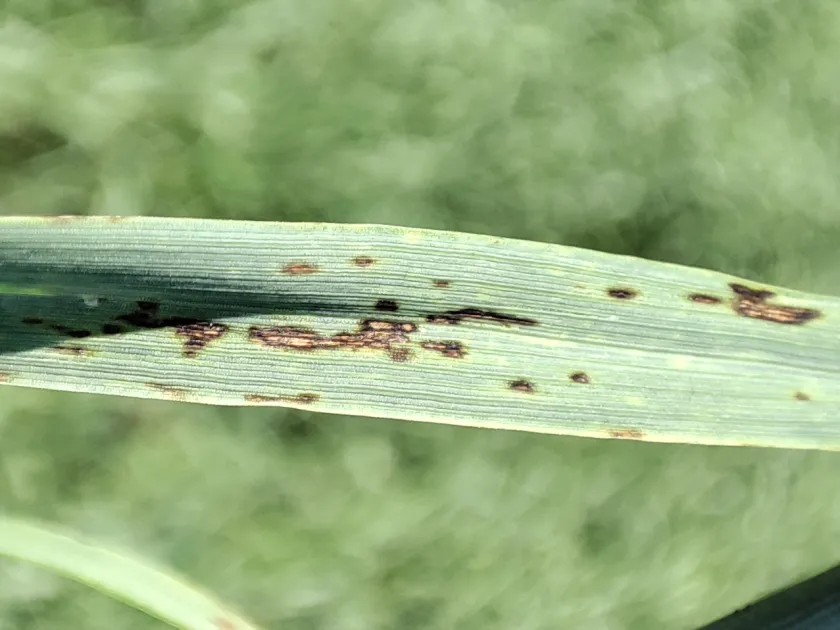
Description
Symptoms
The primary symptom is the appearance of characteristic brown or necrotic lesions on leaves, often described as elliptical or elongated spots with yellow halos.
In humid conditions, a velvety dark-olive or black mycelial growth (sporulation) becomes visible on the surface of the lesions. This is a diagnostic sign of the pathogen's activity.
Stem infection leads to dark, sunken lesions that can cause lodging. When the vascular system is severely damaged, plants exhibit wilting and premature desiccation.
In lentils and other legumes, infection of the pods and seeds can occur, resulting in dark, discolored spots on the seed coat, known as the "black point" symptom.
- Elongated brown necrotic leaf spots.
- Velvety dark fungal growth on infected areas.
- Stem lesions causing plant weakness and lodging.
- Black point discoloration on harvested seeds.
- Premature senescence of the foliage.
Pathogen
The disease is caused by various species of the Helminthosporium fungal genus, which includes agents like Bipolaris and Drechslera. These pathogens are widely distributed and affect a broad spectrum of monocots and dicots, including lentils.
The fungus overwinters in plant debris, soil, and on seeds as mycelium or conidia. These spores can persist in the environment for long periods, waiting for favorable conditions to germinate.
Infection is transmitted through air currents, water splashes during rain, and mechanical contact via farm machinery or insects. Once landing on a susceptible host, the conidia germinate.
The pathogen infects host tissue by penetrating the epidermis through stomata or wounds. Inside the plant, the fungus secretes enzymes and toxins that break down cell walls and cause chlorosis and necrosis.
The disease cycle can repeat several times throughout the growing season, especially when environmental conditions favor sporulation, leading to rapid spread within a field.
Conditions for development
Helminthosporium blight thrives in warm and humid climates. The optimal temperature for fungal growth typically ranges from 20 to 25 degrees Celsius.
High relative humidity (above 80%) is essential for spore germination and infection. Frequent rainfall or heavy dew during the growing season significantly promotes disease outbreaks.
Continuous monocropping or short rotations provide an abundance of inoculum, allowing the fungus to build up quickly in the soil and on crop residues.
Poor aeration in dense plantings creates a microclimate with stagnant, humid air, which is ideal for the rapid spread of the disease from plant to plant.
Nutrient stress, particularly a deficiency in potassium, weakens plant tissues and reduces their ability to produce defensive compounds against fungal penetration.
Why it matters
The disease causes substantial economic losses by reducing both the quantity and quality of the yield. In severe cases, crop losses can exceed 30%.
Damage to the leaf tissue reduces the plant's photosynthetic capacity, leading to poor pod development in lentils and lower grain filling in cereals.
Infected seeds often have reduced germination rates and weakened seedling vigor, which may necessitate reseeding or result in poor stand establishment.
The accumulation of fungal toxins in grain and forage can decrease the quality of animal feed and may pose risks to livestock health if used in large quantities.
The rapid progression of the blight can cause entire fields to wither before maturity, significantly reducing harvest efficiency and overall farm profitability.
Protection
Using certified, disease-free seed that has been treated with appropriate systemic fungicides is the most effective way to prevent primary infection.
Implementing a rigorous crop rotation program where susceptible hosts are separated by several years is critical to reducing the soil-borne inoculum level.
Foliar application of systemic fungicides should be performed as soon as the first symptoms are detected to protect the upper leaves and pods from spread.
Deep plowing of crop residues is an essential cultural practice to bury infected plant parts, promoting their decomposition and destroying the fungus.
Maintaining optimal soil fertility and managing plant density helps plants maintain physiological vigor and improves air circulation, creating a less hospitable environment for the pathogen.
In brief
1
Affects crops
Biology
Pathogens and affected parts
Pathogens
Affected plant parts
leaf
Content graph
Affects crops · 1
Reference
Connections · Helminthosporium blight
Most often together:
Marketplace
Products · 7


Community
Discussion
No discussions yet — be the first.