


SKU #48956
·
66 views
SIBERIAN EARLY
Tomato
User rating
0 votes0% positive reviews
No ratings yet — be the first.
Product Type
Seeds; Seed material
Plant Type
Determinant
Maturation Period
Up to 90 days
Fruit Weight
60-80 grams, 80-100 grams, 100-150 grams
Prices in stores
from4.25 €per 1000 seeds
pack from 0.13 € per 30 pcs
11 offers from 8 stores
Store offers · 11 from 8 stores
Prices are updated on loadLoading offers…
Available at: Флорамаркет · Геліос · Квіти Буковини · Online-Store · Сади Буковини · Семена Буковины · Веснодар · White Duck
Aggregator catalog: prices are collected automatically from store websites, normalized by AI and converted at the current exchange rate. Before ordering, confirm the price and availability on the store's website. This block is not indexed by search engines — the data is loaded after the page opens.
About product

Siberian Early tomato is an early determinate variety with limited growth, reaching a height of 30 to 48 cm. This low-growing bush is suitable for cultivation both in open ground and under plastic covers, making it a versatile choice for regions with short and cool summers. The plant has good growth energy, is moderately leafy, stress-resistant, and requires minimal care, simplifying maintenance a…
Product Type
Seeds; Seed material
Plant Type
Determinant
Maturation Period
Up to 90 days
Fruit Weight
60-80 grams, 80-100 grams, 100-150 grams
Description
Siberian Early tomato is an early determinate variety with limited growth, reaching a height of 30 to 48 cm. This low-growing bush is suitable for cultivation both in open ground and under plastic covers, making it a versatile choice for regions with short and cool summers. The plant has good growth energy, is moderately leafy, stress-resistant, and requires minimal care, simplifying maintenance and increasing the chances of a successful harvest. The variety is resistant to tobacco mosaic virus and brown spot, and is weakly susceptible to phytophthora, significantly reducing disease risks.
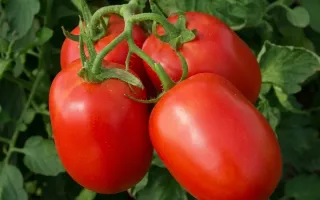
The fruits of Siberian Early tomato have a flat-round, slightly ribbed shape, bright red color, and a weight ranging from 60 to 150 grams. The flesh is juicy, uniform, multi-chambered, with a pleasant sweetness and high content of nutritional microelements. The skin is dense and shiny, ensuring good preservation during transportation without loss of appearance. Each cluster typically bears 3 to 5 fruits, and the plant usually forms 3-4 clusters. The main use of the harvest is fresh consumption, juice preparation, and whole-fruit canning.
For successful cultivation, light, fertile soils are recommended. Good predecessors include cucumbers, cabbage, legumes, onions, and carrots. Seeds are sown in seed trays at the end of March to early April at a depth of 2-3 cm, followed by pinching out when the plants reach the 1-2 true leaf stage. Seedlings are fertilized 2-3 times with complex mineral fertilizers and begin hardening off 7-10 days before transplanting into the ground. Transplanting into open ground occurs on day 55-70 after sowing, when the danger of frost has passed, and slightly earlier when using plastic covers. Plants are trained to a single stem and tied to supports, regularly watered with warm water, and fertilized throughout the growing season to ensure adequate nutrition.
The fruits of Siberian Early tomato have a flat-round, slightly ribbed shape, bright red color, and a weight ranging from 60 to 150 grams. The flesh is juicy, uniform, multi-chambered, with a pleasant sweetness and high content of nutritional microelements. The skin is dense and shiny, ensuring good preservation during transportation without loss of appearance. Each cluster typically bears 3 to 5 fruits, and the plant usually forms 3-4 clusters. The main use of the harvest is fresh consumption, juice preparation, and whole-fruit canning.
For successful cultivation, light, fertile soils are recommended. Good predecessors include cucumbers, cabbage, legumes, onions, and carrots. Seeds are sown in seed trays at the end of March to early April at a depth of 2-3 cm, followed by pinching out when the plants reach the 1-2 true leaf stage. Seedlings are fertilized 2-3 times with complex mineral fertilizers and begin hardening off 7-10 days before transplanting into the ground. Transplanting into open ground occurs on day 55-70 after sowing, when the danger of frost has passed, and slightly earlier when using plastic covers. Plants are trained to a single stem and tied to supports, regularly watered with warm water, and fertilized throughout the growing season to ensure adequate nutrition.
Video · 10 videos
Suggest a video →Crop & resistance
Crop
Specifications hover over for a hint about the specification
| Product Type | |
|---|---|
| Plant Type | |
|
Maturation Period
Maturation Period
Vegetation period from emergence to technical maturity 30-50 days. |
Up to 90 days |
|
Fruit Weight
Fruit Weight
Tomato fruits are classified by weight as: very small — less than 20 grams; small — 20 — 50 grams; medium — 50 — 100 grams; large — 100 — 200 grams; very large — more than 200 grams. |
60-80 grams, 80-100 grams, 100-150 grams |
|
Fruit Shape
Fruit Shape
Modern tomato varieties have a diverse fruit shape: flat, flat-round, round, oval, elongated-oval, pear-shaped, plum-shaped, cube-shaped, and cylindrical. On poorly fertile soils and under unfavorable growing conditions, tomato fruits may take on a more rounded shape. |
|
|
Fruit Color
Fruit Color
The fruit color of tomato varieties is influenced by the combination of skin and flesh color. Some varieties have transparent skin, others — yellow. When combined differently, the fruits can acquire quite diverse colors. The fruit color is affected by pigments (lycopene) and thei... |
|
|
Number of chambers
Number of chambers
An important agronomic trait closely related to fruit size, fleshiness, and seed count. The number of chambers in tomato fruits, or locules, ranges from 2 to over 20. They are determined by counting on a cross-section. Multichamberedness is a trait indicating larger fruit size an... |
|
| Transportability | |
| Registration year | 1959 |
| Catalog | Catalog → Tomato |
| Legal data |
Show · 6
|
| Country | Russia |
Not yet комментариев. Be the first!
Alternatives
Tomato seeds · similar varieties




MALINOVY ZVON
Научно-производственная Фирма Российские Семена
029 7 offers
4.25 €per 1000 seeds ≈ 219 ₴


See also
Often considered together with this variety


WHITE BEAN 241
UNP "Vegetable OS named after V.I. Edelstein"
061 15 offers
2.06 €per 1000 seeds ≈ 106 ₴







Recently viewed
Products you’ve viewed on this site
Reviews · 0