

Disease · fungal · affects Common bean, Grapevine, Papaya
Especially harmful
Angular leaf spot
Pseudomonas syringae
Description
Symptoms
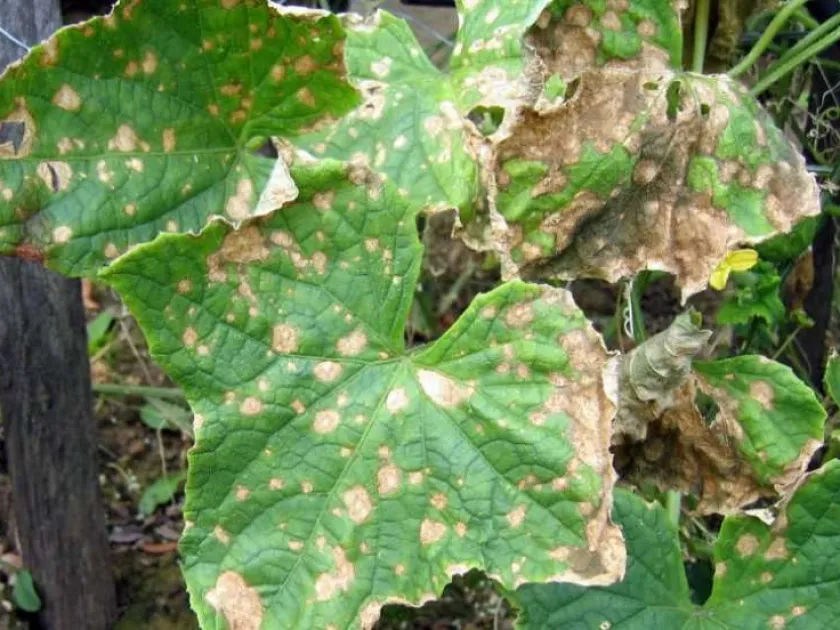
The infection manifests as small, water-soaked, angular spots on the leaves, which are delimited by the leaf veins, creating a characteristic geometric appearance.
Under high humidity conditions, a milky bacterial exudate appears on the undersides of infected leaves, which dries into a thin, whitish crust or film.
On fruits and stems, the pathogen causes sunken, oily-looking lesions that can eventually develop into deep cankers, significantly deforming the plant organs.
As the disease progresses, the necrotic tissues turn brown or black, and the dry centers of the spots may fall out, resulting in a shothole effect on the foliage.
In susceptible species like strawberries or beans, the spots are frequently surrounded by a yellow chlorotic halo, indicating the systemic stress of the plant.
Pathogen
The disease is caused by Pseudomonas syringae, a diverse complex of Gram-negative, rod-shaped bacteria known for their aggressive pathogenic capabilities.
This pathogen exhibits significant host specificity, with different pathovars evolving to infect specific crops such as papaya, tobacco, grapes, or common beans.
The bacteria survive between cropping seasons in contaminated seeds, plant debris, and occasionally in the soil or on roots of volunteer host weeds.
Once inside the plant, the bacteria utilize specialized type III secretion systems to inject effectors that suppress the plant's immune response and facilitate colonization.
The ability of this pathogen to thrive in cool-to-moderate climates makes it a persistent threat in many agricultural regions across the globe.
Conditions for development
The development of the disease is highly dependent on environmental conditions, with cool to moderate temperatures and high humidity being the primary drivers.
Splashing water from heavy rainfall or overhead irrigation systems is the main mechanism for local dissemination, carrying bacteria from infected leaves to healthy ones.
Warm, rainy, and windy weather provides the perfect environment for the pathogen to spread rapidly through a field, causing sudden outbreaks of the disease.
Mechanical injuries, such as those caused by hail, heavy wind, or agricultural implements, provide easy entry points for the bacteria to infect healthy plant tissues.
High nitrogen fertilization can lead to soft, succulent growth that is more susceptible to rapid colonization by Pseudomonas species in dense canopy environments.
Why it matters
The primary economic impact of angular leaf spot is the severe reduction in photosynthetic efficiency due to extensive leaf damage and premature defoliation.
Infection of fruit-bearing crops leads to cosmetic blemishes that render the produce unmarketable, causing significant financial losses to farmers.
Secondary infections by saprophytic organisms often occur in the lesions caused by the bacteria, leading to further rotting and loss of post-harvest quality.
For crops like tobacco, the disease can render entire harvests unusable, as the quality of the leaf is destroyed by the spreading necrotic spots.
Increased input costs for disease management, including chemical sprays and labor for sanitation, significantly reduce the overall profitability of the enterprise.
Protection
The first line of defense is the use of disease-free, certified seeds, as many strains of Pseudomonas syringae are known to be seed-borne.
Practicing long-term crop rotation is essential, as it helps to break the life cycle of the bacteria by ensuring that host plants are not present in the soil.
Sanitation is critical; all infected crop residues must be promptly removed and destroyed or deep-plowed to minimize the potential inoculum for the next season.
Fixed copper-based fungicides are standard chemical interventions that help protect the foliage from new bacterial infections during periods of high humidity.
Ensuring adequate plant spacing and proper greenhouse ventilation reduces leaf wetness duration, which is crucial for preventing the establishment of the disease.
In brief
6
Affects crops
Biology
Pathogens and affected parts
Pathogens
Affected plant parts
leaf
Content graph
Affects crops · 6
Reference
Connections · Angular leaf spot
Most often together:
Marketplace
Products · 56







Community
Discussion
No discussions yet — be the first.