
Description
Symptoms
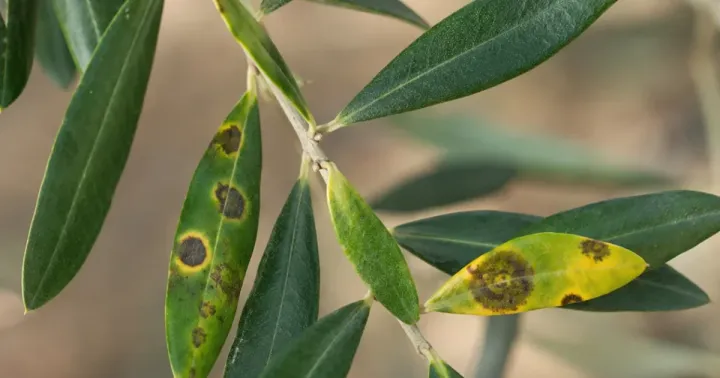
Initial symptoms manifest as small, water-soaked spots on the leaves, which gradually turn olive or brown. Often, a distinct chlorotic halo can be observed around these lesions.
On fruits, the disease appears as small, sunken ulcers that deepen over time and become covered with a velvety, olive-green fungal growth. This is the primary diagnostic sign of the pathogen.
As the infection progresses, affected leaf tissues begin to dry and crumble, leading to the formation of irregular holes. In severe cases, the entire leaf turns yellow and dies prematurely.
Infected fruits become deformed, lose their commercial value, and rot quickly due to secondary microbial infestation. Taste quality is significantly degraded once the infection reaches the fruit.
If the stems are infected, longitudinal cracks and ulcers may form, disrupting the transport of water and nutrients and leading to the wilting of the entire plant.
Pathogen
The disease is caused by the imperfect fungus Cladosporium cucumerinum. This pathogen thrives on plant debris and can persist in the soil for several years, maintaining its viability.
The fungus primarily targets cucurbit crops, with cucumbers being particularly susceptible in both greenhouse and open-field conditions. The pathogen produces conidial spores that disperse easily via wind and water splashes.
The pathogen's life cycle is closely linked to environmental humidity. The fungus enters plant tissues through stomata or mechanical wounds, rapidly colonizing the intercellular spaces of the host.
Fungal spores demonstrate high resistance to temperature fluctuations, allowing the pathogen to overwinter in soil, seeds, or crop residues. Under favorable conditions, mycelium growth begins even at moderate temperatures.
The biology of Cladosporium cucumerinum is characterized by a rapid generation cycle of new spores. This capacity enables the disease to cover large areas of cultivation in a very short timeframe.
Conditions for development
High relative humidity, exceeding 85–90 percent, is the primary factor favoring the development of olive spot. High humidity is critical for spore germination and colonization.
The optimal temperature range for the pathogen's growth is between 15 and 20 degrees Celsius. Sharp temperature drops between day and night lead to condensation on leaves, which triggers infection.
Poor ventilation in greenhouses creates ideal conditions for stagnant, humid air. Densely planted crops significantly increase the risk of rapid disease spread throughout the greenhouse environment.
Improper irrigation, especially overhead watering in the evening, creates a favorable environment for infection. Irrigation should be applied strictly at the root zone to minimize leaf surface moisture.
Inadequate agricultural practices, such as failing to practice crop rotation, lead to the accumulation of inoculum in the soil, making outbreaks inevitable when weather conditions turn favorable.
Why it matters
The economic harm of olive spot lies in significant yield loss, which can reach 50 percent or more in epidemic years. The disease negatively affects both the vegetative mass and the fruits.
The loss of fruit quality makes the produce unsuitable for market sale. The presence of ulcers on fruits prevents long-term storage and long-distance transport.
Premature destruction of the leaf apparatus disrupts the photosynthetic process. This severely affects the development of remaining fruits and reduces the plant's overall vigor.
Infected plants become weakened and increasingly vulnerable to other pathogens and pests. Ultimately, the disease can lead to total crop failure if timely intervention is not provided.
The financial impact includes not only the loss of harvest volume but also the high costs associated with purchasing fungicides and the labor required for spray applications.
Protection
The most important prevention method is strict adherence to crop rotation. Replanting cucurbit crops on the same site should be avoided for at least three to four years.
It is essential to thoroughly remove and destroy all plant residues after harvest. Deep plowing of the soil helps reduce the pathogen reservoir in the upper soil layers.
Utilizing resistant or tolerant hybrids is the most effective protection strategy. Breeding programs continuously provide varieties that are better adapted to specific regional conditions.
For chemical control during the growing season, authorized copper-based fungicides or systemic products are used. Rotating active ingredients is crucial to prevent the fungus from developing resistance.
In greenhouses, maintaining an optimal microclimate through regular ventilation is critical. Utilizing drip irrigation systems prevents water from coming into contact with the above-ground parts of the plants.
Content graph
Connections · Olive spot
Most often together:
Marketplace
Products · 621





September
UNP "Vegetable OS named after V.I. Edelstein"
Cucumber
0
0
·
32
4 offers
98 €per 1000 seeds
Buy


Community
Discussion
No discussions yet — be the first.