
Disease
Especially harmful
Tomato black bacterial spot
Xanthomonas campestris pv. vesicatoria
Description
Symptoms
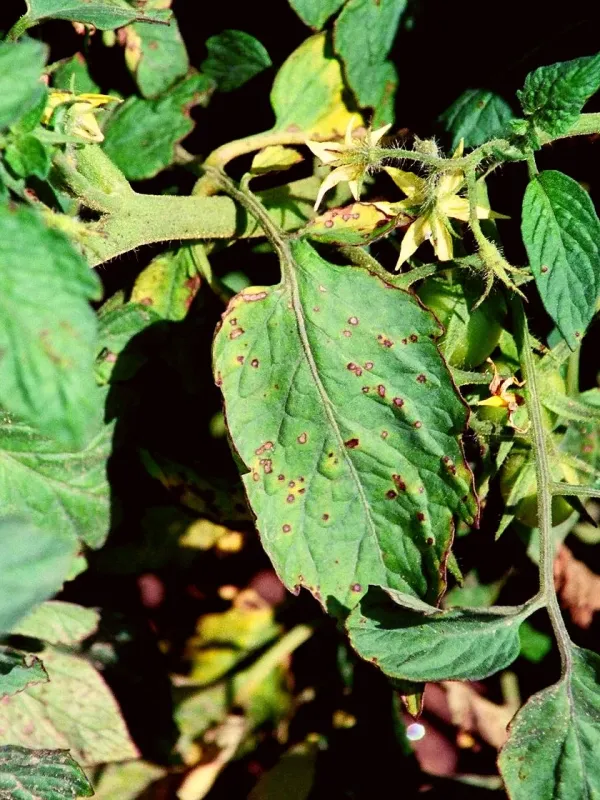
Initial symptoms appear on leaves as small, water-soaked, dark green spots surrounded by a yellow halo. Over time, these spots turn dark brown or black, become angular, and may coalesce, leading to tissue necrosis.
On stems and petioles, the disease manifests as elongated dark streaks or lesions. In cases of severe infection, premature yellowing and dropping of leaves occur, significantly weakening the plant.
Fruits are affected at all developmental stages. Small black spots appear on the surface, eventually turning into deep, sunken, dry lesions with corky tissue.
Under high humidity, spots on fruits can become soft, leading to secondary infection by other rot-causing microorganisms. These fruits lose their market value and become unsuitable for consumption.
The overall state of the plant during a bacterial attack is characterized by stunted growth, deformation of young shoots, and a significant reduction in photosynthetic capacity.
Pathogen
The causative agent of the disease is the gram-negative bacterium Xanthomonas campestris pv. vesicatoria. This pathogen enters the plant tissues through natural openings like stomata or via mechanical injuries caused during cultivation.
The bacterium can persist in seeds, soil-borne plant debris, and on weed hosts within the Solanaceae family. It actively multiplies within the vascular system, suppressing the plant's immune response and disrupting metabolic processes.
The infection is highly aggressive and spreads through contact. During the growing season, the pathogen is disseminated by rain splashes, dew, irrigation water, and contaminated tools during agricultural operations.
The microorganism remains viable across a wide temperature range, but it thrives most rapidly in warm, humid conditions. Its life cycle is closely linked to air humidity levels and the intensity of moisture present on the plant surface.
The pathogen affects not only tomatoes but also other solanaceous crops, including peppers and eggplants. This necessitates strict crop rotation to reduce the infectious pressure within the field.
Conditions for development
Optimal conditions for disease development include temperatures ranging from 25 to 30 degrees Celsius. Within this range, bacterial multiplication occurs at its maximum rate.
High relative humidity, exceeding 80%, is a critical factor for the onset of an epidemic. Prolonged rainy periods or overhead irrigation create the perfect environment for the pathogen to spread.
The presence of water droplets on the leaves is essential for bacterial cell germination. Therefore, dense plantings with poor air circulation are the first to be affected by the disease.
Plant damage caused by pruning, suckering, or pests such as thrips and whiteflies provides direct entry points for the infection to infiltrate the plant tissues.
Using infected seed material without proper treatment is also a primary channel for introducing the disease into new production areas.
Why it matters
The primary damage lies in the significant reduction of marketable yield. Infected fruits cannot be stored or transported effectively due to the high risk of rapid decay.
The disease leads to premature leaf loss, which reduces the plant's nutritional area and leads to lower fruit weight. In severe cases, yields can be reduced by 50–70%.
Infection of young seedlings often results in complete crop loss, as recovery of severely diseased plants is rarely economically feasible.
The accumulation of the pathogen in the soil makes it impossible to grow solanaceous crops on the same site for several years, requiring additional investment in soil remediation.
Bacterial spot significantly weakens the plant, making it more susceptible to other diseases such as early blight or fusarium wilt.
Protection
Prevention begins with the use of disease-free seed material. Seeds must be disinfected using chemical treatments or heat treatment protocols.
Strict crop rotation is mandatory: do not plant tomatoes in the same spot for at least 3–4 years. Removing and burning all plant debris after the season ends is essential.
In greenhouses, maintain an optimal microclimate: ensure proper ventilation, avoid overwatering, and irrigate directly at the base of the plant to keep leaves dry.
If the first signs of the disease appear, apply copper-based fungicides (such as Bordeaux mixture or copper oxychloride) to create a protective barrier on the plant surface.
- Maintain vigorous pest control to eliminate vectors.
- Disinfect gardening tools after handling infected plants.
- Grow resistant tomato varieties and hybrids.
- Utilize biological control agents based on Bacillus subtilis.
Reference
Connections · Tomato black bacterial spot
Most often together:
Marketplace
Products · 6


Community
Discussion
No discussions yet — be the first.