


SKU #53858
·
31 views
Girlanda
Cucumber
User rating
0 votes0% positive reviews
No ratings yet — be the first.
Plant Type
Generative
Pollination Type
Parthenocarpic
Beginning of fruiting
40 - 45 days
Growing
Glass greenhouses, Open Ground
Prices in stores
from9.06 €per 1000 seeds
pack from 0.24 € per 0.25 g
2 offers from 2 stores
Store offers · 2 from 2 stores
Prices are updated on loadLoading offers…
Available at: Good Harvest · Наша Грядка
Aggregator catalog: prices are collected automatically from store websites, normalized by AI and converted at the current exchange rate. Before ordering, confirm the price and availability on the store's website. This block is not indexed by search engines — the data is loaded after the page opens.
About product

Girlanda F1 — an early-maturing parthenocarpic hybrid of cucumber-cornichon, which begins fruiting 42-50 days after germination. The plant is characterized by vigorous growth and medium or above-average branching, with female flowering and formation of 3 to 7 fruits per node. Leaves are dark green, medium-sized, and fruits have a short-cylindrical shape, 8 to 14 cm long, bright green or dark green…
Plant Type
Generative
Pollination Type
Parthenocarpic
Beginning of fruiting
40 - 45 days
Growing
Glass greenhouses, Open Ground
Description
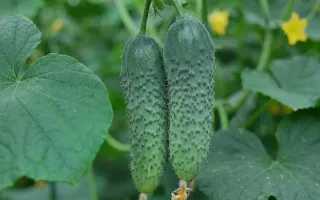
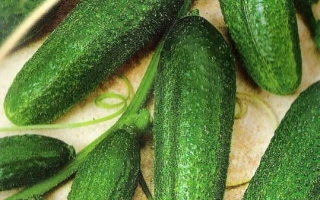
Girlanda F1 — an early-maturing parthenocarpic hybrid of cucumber-cornichon, which begins fruiting 42-50 days after germination. The plant is characterized by vigorous growth and medium or above-average branching, with female flowering and formation of 3 to 7 fruits per node. Leaves are dark green, medium-sized, and fruits have a short-cylindrical shape, 8 to 14 cm long, bright green or dark green in color with a white-spined, bumpy surface. Average weight of green fruits is 115 to 130 grams. The internal flesh of the fruits is dense, juicy, and crunchy, ensuring excellent taste qualities and high value for fresh consumption, pickling, and canning.
The hybrid is characterized by high yield — 12 to 16 kg per square meter — as well as resistance to major cucumber diseases, including cladosporiosis, powdery mildew, root rot, olive spot, false powdery mildew, and cucumber mosaic virus. Due to its disease resistance and ability to withstand cold, Girlanda F1 is especially recommended for cultivation in northern regions and areas with sharp temperature fluctuations and cold fogs. The plant is light-loving but shade-tolerant, allowing cultivation in plastic greenhouses, on balconies, loggias, and even indoors.
For successful cultivation, seedlings should be sown at the end of April, followed by transplanting into the ground at the end of May — beginning of June, when the plant has 3-4 true leaves. When grown in greenhouses, plants are grown as single stems, planted according to the 30x70 cm scheme. The hybrid exhibits bunching fruit set and self-regulating branching, promoting abundant and prolonged fruiting until late autumn. All these qualities make Girlanda F1 a versatile and reliable choice for gardeners seeking a high and stable yield of tasty and aromatic cucumbers.
The hybrid is characterized by high yield — 12 to 16 kg per square meter — as well as resistance to major cucumber diseases, including cladosporiosis, powdery mildew, root rot, olive spot, false powdery mildew, and cucumber mosaic virus. Due to its disease resistance and ability to withstand cold, Girlanda F1 is especially recommended for cultivation in northern regions and areas with sharp temperature fluctuations and cold fogs. The plant is light-loving but shade-tolerant, allowing cultivation in plastic greenhouses, on balconies, loggias, and even indoors.
For successful cultivation, seedlings should be sown at the end of April, followed by transplanting into the ground at the end of May — beginning of June, when the plant has 3-4 true leaves. When grown in greenhouses, plants are grown as single stems, planted according to the 30x70 cm scheme. The hybrid exhibits bunching fruit set and self-regulating branching, promoting abundant and prolonged fruiting until late autumn. All these qualities make Girlanda F1 a versatile and reliable choice for gardeners seeking a high and stable yield of tasty and aromatic cucumbers.
Video · 3 videos
Suggest a video →Crop & resistance
Specifications hover over for a hint about the specification
| Plant Type | |
|---|---|
|
Pollination Type
Pollination Type
Based on pollination type, all existing cucumber varieties are divided into two groups: insect-pollinated and parthenocarpic (parthenocarpics). Insect-pollinated — cucumber varieties that are pollinated by insects. The plant has both male and female flowers (sterile flowers). Par... |
|
|
Beginning of fruiting
Beginning of fruiting
The early maturity of watermelon varieties mainly depends on the duration of growth and fruit ripening phases, rather than the timing of female flower blooming. Many varieties, ripening at different times, begin to bloom almost simultaneously. Approximately 30 days after fruit se... |
40 - 45 days |
|
Growing
Growing
Eggplant is grown in open fields and under protective cover on small areas. |
|
|
Fruit; spines
Fruit; spines
Important variety characteristic of cucumber. Can be finely ribbed or coarsely ribbed with white and black spines. |
|
|
Fruit; length
Fruit; length
Length from 6 to 70 cm. |
7 - 9 cm, 10 - 12 cm |
|
Fruit; flower
Fruit; flower
At technical maturity, fruit color varies from white, light purple to dark purple. |
|
|
Fruit; weight
Fruit; weight
Table watermelons weigh 0.6-16 kg. |
100, 110 |
| Registration year | 2010 |
| Catalog | Catalog → Cucumber |
| Legal data |
Show · 9
|
| Country | Russia |
Not yet комментариев. Be the first!
Alternatives
Cucumber seeds · similar varieties



See also
Often considered together with this variety








Recently viewed
Products you’ve viewed on this site
Reviews · 0