

Description
Symptoms
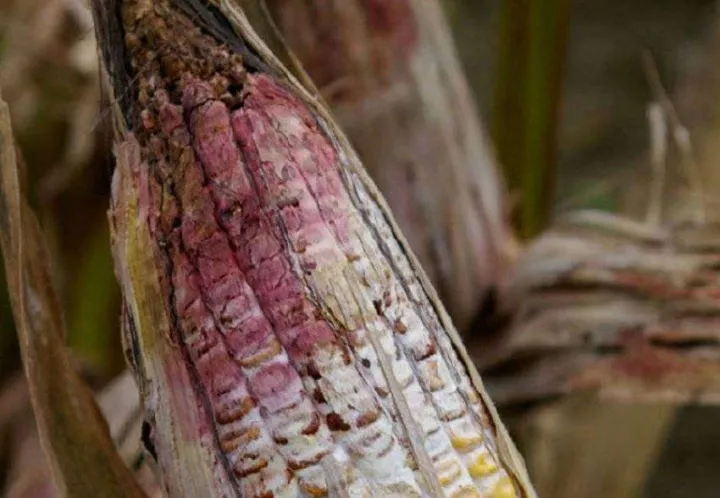
The most common symptom is the presence of white, pink, or salmon-colored fungal growth on the kernels, typically found on the ear tip or around insect feeding sites.
Affected kernels may show a white streaking pattern on the pericarp, often referred to as "starburst" symptoms, followed by decay and discoloration.
Internal infection may not be visible externally until the husk is pulled back, revealing a dense mycelial mat that binds the kernels to the husk.
In cases of stalk rot, the internal pith tissue becomes discolored and shredded, and the plant often dies prematurely before the grain is fully mature.
Seedling blight symptoms include rotting of the seed and roots before or immediately after emergence, leading to poor and uneven stand establishment.
Pathogen
The causative agent of Fusarium ear rot is the fungus Fusarium verticillioides (syn. Fusarium moniliforme), a widespread pathogen belonging to the Ascomycota division.
This fungus is highly adaptable and can survive as a saprophyte on crop debris or as a parasite on corn tissues throughout the growing season.
It spreads via conidia through wind and rain splashes, often utilizing wounds created by insects such as the European corn borer as entry points into the ear.
Besides tissue destruction, Fusarium verticillioides is well-known for producing mycotoxins, particularly fumonisins, which represent a significant health risk.
The fungus is capable of infecting all parts of the corn plant, including roots, stalks, and grains, making it a persistent challenge in maize production globally.
Conditions for development
Development is favored by warm and humid conditions, particularly during the silking and grain-filling stages of corn development.
High insect activity, especially from corn borers, significantly increases the incidence of disease by providing pathways for the fungus to enter the ears.
Moisture stress, either from drought or excessive rainfall, can weaken the plant and increase its susceptibility to Fusarium infections.
Monocropping and minimal tillage practices tend to increase the survival of the pathogen in the soil, raising the risk of infection in subsequent seasons.
High plant density and inadequate air circulation within the canopy create microclimates that facilitate fungal sporulation and spread within the field.
Why it matters
Fusarium ear rot causes direct yield loss by reducing grain weight and quality, often resulting in significant economic impact for maize producers.
The presence of fumonisins makes the grain dangerous for livestock feed and food processing, leading to market rejections and regulatory issues.
Plants affected by stalk rot are prone to lodging, which complicates harvesting operations and causes additional losses of harvestable yield.
Grain harvested from infected fields often has poor seed quality, resulting in reduced germination rates and weakened plant vigor in the following year.
The reduction in grain test weight and the degradation of nutritional value diminish the overall economic viability of the affected maize crop.
Protection
Implementing crop rotation with non-host crops is a critical management strategy to break the life cycle of the pathogen and reduce inoculum levels.
Selecting corn hybrids with natural resistance to ear rot or enhanced resistance to insect pests can greatly decrease the incidence of infection.
Proper management of plant residues, including tillage where appropriate, helps accelerate the decomposition of infected debris and lowers the pathogen population.
Effective insect control programs, especially against lepidopteran pests, are essential to prevent the mechanical damage that facilitates fungal entry.
- Use of high-quality fungicide-treated seeds.
- Balanced nutrient application to optimize plant health.
- Timely harvesting to minimize the duration of field exposure.
- Proper drying and storage of grain to prevent further fungal growth.
Content graph
Connections · Fusarium ear rot
Most often together:
Marketplace
Products · 982






Community
Discussion
No discussions yet — be the first.