

Description
Symptoms
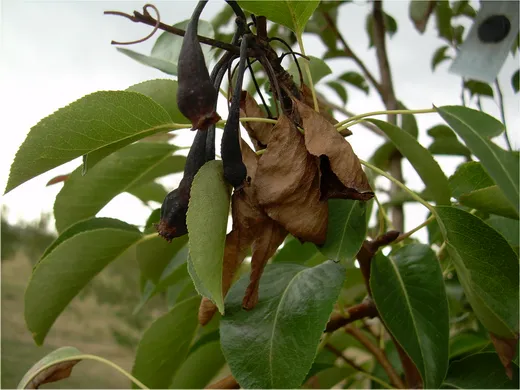
A hallmark sign of bacteriosis is the appearance of water-soaked spots on leaves, stems, or fruits. These lesions often transition from a translucent state to dark, necrotic, or oily-looking patches.
Bacterial wilt is another common symptom, where the plant loses turgor and wilts despite adequate soil moisture. This is caused by bacteria colonizing the xylem and producing extracellular polysaccharides that block water transport.
Soft rot, characterized by a foul-smelling, mushy breakdown of tissues, is frequently seen in tuberous and fleshy crops. The internal structure loses integrity and turns into a soft, liquefying mass.
On leaves, bacteria may cause vein darkening or chlorosis. In humid conditions, one may observe bacterial streaming or droplets of exudate emerging from the lesions, which are masses of concentrated bacterial cells.
Systemic infections often show discoloration of the vascular ring in stems or roots. When cross-sectioned, these tissues may appear brownish or blackened, sometimes exuding a milky or yellowish substance.
Pathogen
Bacteriosis is a broad term for infectious plant diseases caused by phytopathogenic bacteria. These microorganisms invade plant tissues through natural openings like stomata or through wounds caused by insect feeding, hail, or agricultural tools.
Once inside the host plant, these bacteria multiply rapidly, secreting enzymes that degrade cell walls and middle lamellae. This process leads to tissue maceration, commonly manifested as soft rot or structural collapse of plant parts.
Many plant-pathogenic bacteria, including those related to Bacteroidetes and various Proteobacteria, can survive in crop residues, soil, and seeds. Their survival strategies often include the formation of biofilms, which protect them from environmental stress.
The transmission of these pathogens is highly efficient, occurring through irrigation water, splashing rain, contaminated equipment, and insect vectors. Because of this mobility, local outbreaks can quickly become epidemic in scale.
Effective management requires precise identification, as bacterial diseases are often confused with nutrient deficiencies or fungal infections. Diagnostic laboratory confirmation is often necessary for accurate pathogen identification.
Conditions for development
High humidity and rainfall are the primary catalysts for the development and spread of bacteriosis. A film of water on plant surfaces allows bacteria to move and penetrate plant tissues easily.
Temperature significantly influences the rate of infection. Most phytopathogenic bacteria thrive in warm conditions, typically ranging from 20°C to 30°C. High temperatures often correlate with rapid disease progression.
Wounds are essential for many bacterial invasions. Factors such as wind damage, insect feeding, or careless pruning create entry points for pathogens, making the crop highly vulnerable to colonization.
Poor soil aeration and waterlogged conditions create an environment that suppresses root health and promotes the activity of anaerobic bacteria, leading to the rapid decay of the root system.
Nutrient imbalance, particularly excessive nitrogen fertilization, results in succulent tissue growth. This delicate growth is less resistant to mechanical damage and more susceptible to bacterial invasion.
Why it matters
The harm caused by bacteriosis is severe, often resulting in significant yield losses. In many cases, systemic bacterial infections can kill a plant before it reaches maturity, causing complete crop failure.
Post-harvest losses are a major economic concern, as bacteria causing soft rots can spread quickly through storage facilities, destroying large inventories from a single infected source.
Quality degradation is another impact; produce affected by bacteria is often unmarketable, showing lesions, rot, or foul odors. This reduces the economic value of the harvest and consumer trust.
Bacteriosis poses a threat to international trade, as many bacterial diseases are strictly regulated as quarantine pests. Their presence can trigger trade bans on agricultural products.
Economic costs escalate due to the difficulty of control; chemical treatments for bacteria are fewer and often less effective than those for fungi, necessitating a reliance on costly preventative measures.
Protection
The most effective strategy is the use of resistant or tolerant cultivars. Breeding programs focus on creating varieties that can withstand bacterial pressure without significant yield loss.
Strict sanitation and crop rotation are essential. Removing infected plant debris and rotating to non-host crops helps break the lifecycle of bacteria present in the soil and reduces the overall inoculum level.
Integrated Pest Management (IPM) is critical to controlling insect vectors. By managing the populations of insects that transmit bacteria, farmers can significantly reduce the incidence of disease transmission.
Preventative applications of copper-based bactericides or biocontrol agents (such as beneficial bacteria) can provide a protective barrier on plant surfaces during periods of high disease risk.
Adopting good agricultural practices, including disinfecting tools and equipment between rows and ensuring adequate spacing for airflow, helps maintain a less favorable microclimate for bacterial development.
Content graph
Connections · Bacteriosis
Most often together:
Weeds
1 contact
Marketplace
Products · 147









Community
Discussion
No discussions yet — be the first.