
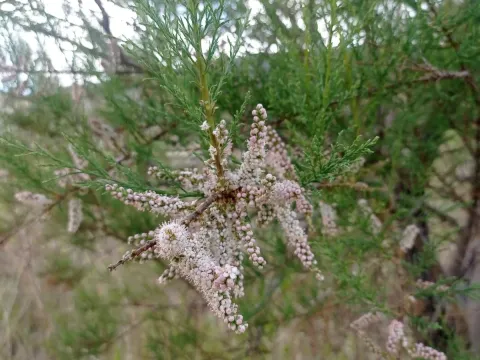
Four-stamen tamarisk
Tamarix tetragyna
The Four-stamen tamarisk (Tamarix tetragyna) is a deciduous shrub species belonging to the Tamaricaceae family. It is native to the Eastern Mediterranean and the Near East, where it has adapted to diverse climatic challenges.
What the section contains
Four-stamen tamarisk
This species is highly valued for its exceptional drought tolerance and its ability to thrive in saline soils, making it an ideal candidate for soil stabilization and landscape restoration in arid regions.
Optimal growth requires full sun exposure and well-drained soil conditions. While the plant can tolerate poor sandy soils, it struggles in waterlogged sites where oxygen availability in the soil is restricted.
The plant demonstrates good resistance to wind, which is crucial in its natural habitat of exposed coastal or desert zones. It requires minimal irrigation once the root system is well-established in the field.
In terms of temperature, Tamarix tetragyna prefers mild winters and warm summers. It produces characteristic racemes of small, delicate flowers during the spring, which differentiate it from later-blooming species.
The most significant threat to the health of this shrub is excessive moisture, which leads to root rot and other soil-borne diseases. Ensuring proper drainage is the primary defense against such issues.
Pests, particularly aphids and various scale insects, can infest the foliage and stems, causing yellowing and stunted growth. Regular inspection of the plant canopy is essential for early detection.
Powdery mildew can occur in areas with high humidity or poor air circulation within the shrub. To prevent this, planting should be spaced correctly to allow for proper airflow around the foliage.
Integrated pest management strategies are recommended, focusing on maintaining plant vigor through proper pruning and preventing stress-inducing conditions that make the plant vulnerable.
- Regular pruning to improve air circulation.
- Monitoring for scale insects and aphids.
- Avoidance of irrigation during dormant winter periods.