
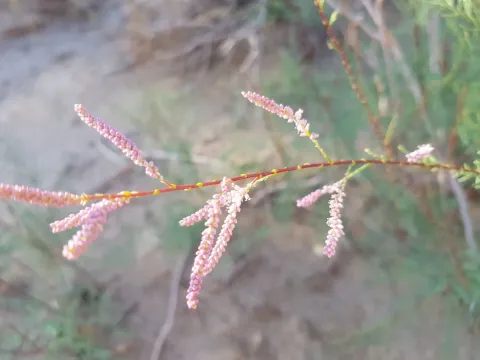
Tamarix gracilis
Tamarix gracilis
Tamarix gracilis, commonly known as the slender tamarisk, is a perennial shrub or small tree belonging to the Tamaricaceae family. It is highly valued for its ability to thrive in extreme, arid environments where other species fail.
What the section contains
Tamarix gracilis
Its natural range encompasses the steppe and semi-desert regions of Eurasia. In agricultural practices, it is utilized as a vital reclamation species for soil stabilization and windbreaks in challenging climates.
The plant exhibits remarkable physiological adaptations, most notably its extreme salt tolerance and resistance to prolonged droughts. Its deep root system allows it to access groundwater even in harsh, desert-like conditions.
Optimal growth conditions include high solar radiation and well-drained, sandy or loamy soils. Tamarix gracilis does not tolerate shade or waterlogged conditions, making it unsuitable for wet, heavy clay sites.
Field management primarily involves initial establishment support, such as weeding and moderate irrigation during the first growing season, after which the plant becomes largely self-sufficient in its environment.
Tamarix gracilis can be susceptible to specific insect pests, including various species of tamarisk beetles (Diorhabda spp.), which can cause significant defoliation if left unmanaged in large plantations.
Gall mites may also cause abnormal growths on the stems, which can affect the plant's structural integrity and aesthetic value. Targeted systemic insecticide applications are generally effective against these pests.
Fungal diseases like powdery mildew or root rot are less common but may occur if the soil remains excessively moist for extended periods. Good site selection is the best way to prevent these issues.
Integrated pest management (IPM) strategies for this culture focus on monitoring population thresholds and using biological controls where possible to maintain the ecosystem balance.
Maintaining proper planting density is essential to ensure good air circulation, which significantly reduces the risk of fungal pathogens establishing themselves within the canopy.