
Indian Tamarisk
Tamarix indica
The Indian Tamarisk (Tamarix indica) is a hardy shrub belonging to the Tamaricaceae family. It is widely recognized for its ability to thrive in harsh environments, particularly in arid and semi-arid regions of South Asia.
What the section contains
Indian Tamarisk
Native to regions spanning India and Pakistan, this species has evolved to withstand extreme temperature fluctuations and high soil salinity levels. It is an essential component of desert ecosystems and coastal environments.
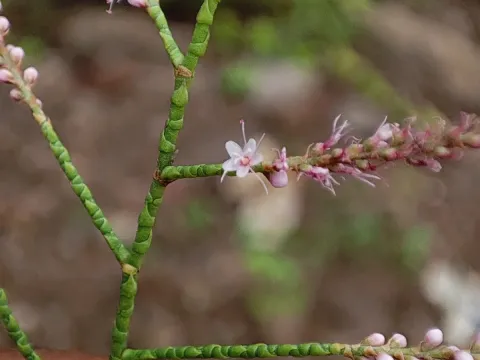
The botanical characteristics of the Indian Tamarisk include scale-like leaves and a delicate, feathery appearance. It is highly drought-tolerant, utilizing a deep root system that anchors the plant firmly into sandy or degraded soils.
Regarding light requirements, this plant is an absolute sun-lover. It requires full, direct sunlight throughout the day to sustain its vigorous growth patterns and to produce its characteristic plumes of small flowers.
The soil requirements are minimal; the plant prefers well-drained, sandy, or saline soils. It is frequently employed in land reclamation projects to stabilize shifting dunes and to remediate soils that are too alkaline for traditional agriculture.
Despite its robustness, the Indian Tamarisk can be vulnerable to infestations by aphids and scale insects. If left unchecked, these pests can weaken the overall vitality of the plant, especially during the peak of the growing season.
Fungal diseases, such as powdery mildew, may manifest if the planting density is too high or if airflow is poor. Proper spacing during the initial planting phase is critical to ensuring long-term health and minimizing fungal outbreaks.
Spider mites are common in drier climates, often appearing during heatwaves. A balanced irrigation strategy and occasional misting can deter these pests and maintain the plant's aesthetic appeal in garden settings.
Young plants are sensitive to intense competition from invasive grasses. Maintaining a clean area around the base of the shrub is essential for the first two years of development until the root system is sufficiently established.
Winter care is necessary in regions prone to frost, as severe cold can cause dieback of the outer branches. Regular pruning of damaged tissue is recommended to ensure that the plant redirects its energy into healthy spring regrowth.