
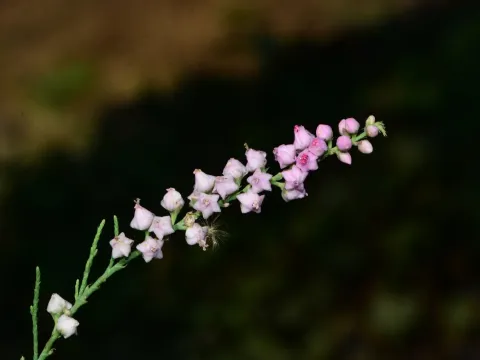
Tamarix ericoides
Tamarix ericoides
Tamarix ericoides is a perennial shrub belonging to the Tamaricaceae family. The plant is distinguished by its unique, heather-like foliage, which separates it visually from other members of the genus and gives it a highly ornamental appeal.
What the section contains
Tamarix ericoides
Originating from regions in India, this species is typically found along riverbanks and rocky areas. It has evolved to be highly resilient, thriving in conditions that would be challenging for many other species, particularly in saline soils and arid environments.
To ensure optimal development, Tamarix ericoides requires a sunny location with excellent drainage. Exposure to full sunlight is critical, as any significant shading will lead to weak growth and poor flowering performance. It performs best in open landscapes with good air circulation.
In terms of soil, this plant is quite versatile. It prefers sandy, loamy, or even stony substrates. Its tolerance for saline environments makes it an excellent candidate for restoration projects in areas where soil quality is poor or compromised by salt content.
The agrotechnical requirements are straightforward: provide regular watering during the establishment phase. Once the plant has developed a deep root system, it becomes exceptionally drought-tolerant and requires minimal intervention, making it a low-maintenance choice for large-scale landscaping.
Fungal diseases are the primary threat, often resulting from excessive soil moisture or poor drainage around the root zone. Ensuring the soil is well-drained and preventing waterlogging are the most effective preventative measures against root rot and related fungal issues.
Pests such as scale insects and aphids can occasionally target the succulent young shoots of the plant. Regular monitoring is essential, particularly during the active growing season, to detect early infestations and apply appropriate integrated pest management solutions if necessary.
Powdery mildew may occur if the plant is grown in conditions of high humidity with limited airflow. Pruning the shrub to maintain an open canopy structure significantly improves ventilation and reduces the likelihood of these common fungal infections taking hold.
Avoiding excessive nitrogen fertilization is recommended to prevent soft, succulent growth that is more susceptible to both pests and diseases. Maintaining a balanced nutrient regime helps the plant develop stronger tissues and enhances its natural resistance to environmental stressors.
General hygiene, such as removing fallen leaves and pruning dead or diseased branches, is vital for maintaining the plant's health. By strictly following site selection and maintenance guidelines, growers can ensure that Tamarix ericoides remains healthy and resilient throughout its lifespan.