
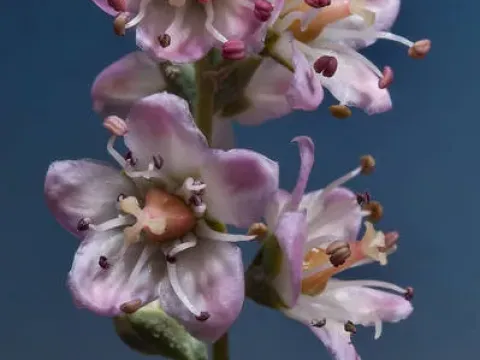
Tamarix passerinoides
Tamarix passerinoides
Tamarix passerinoides is a perennial shrub belonging to the Tamaricaceae family. It is a highly specialized plant species, naturally adapted to thrive in arid and hyper-arid environments with extreme salinity levels.
What the section contains
Tamarix passerinoides
Native to the desert regions of Northern Africa and parts of Central Asia, this species has evolved unique physiological mechanisms. It possesses salt-secreting glands on its foliage, which allow it to maintain osmotic balance while growing in saline-rich soils.
The botanical structure consists of scale-like, reduced leaves that effectively minimize moisture loss. The plant is typically found in habitats with access to subterranean water, even if that water is brackish or high in mineral content.
Agricultural requirements for this crop focus on high solar radiation exposure and well-drained soil. It is particularly well-suited for sandy or saline terrains where conventional crop production is not viable due to soil degradation.
While the species is notably drought-tolerant once established, nurseries often provide initial irrigation to young seedlings. Proper spacing is necessary to allow for root expansion and optimal airflow throughout the canopy.
The primary threats to Tamarix passerinoides include infestation by sap-sucking insects, such as scale insects or aphids, which can stunt new growth if left unmanaged during the early growth stages.
Fungal pathogens may occasionally affect the root system, particularly in cases of poor drainage or waterlogging. Maintaining dry soil surface conditions around the base of the plant is a critical preventive measure.
Economically, this species is highly valued for desert reclamation projects and the stabilization of moving sand dunes. It acts as an essential component of shelterbelts, protecting fertile fields from wind erosion.
Beyond soil conservation, the plant is recognized for its potential as a source of biomass in regions with scarce freshwater resources. It serves as an important honey plant in specific arid ecological niches.
Ongoing monitoring of plant health is recommended in large-scale plantations to ensure long-term stability. Given its ecological resilience, it remains a pillar for sustainable agriculture in desert ecosystems.