
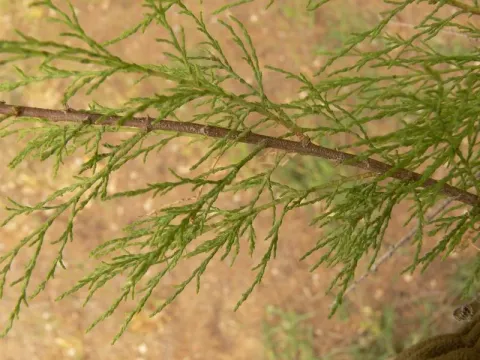
Nile tamarisk
Tamarix nilotica
Nile tamarisk (Tamarix nilotica) is a member of the Tamaricaceae family, recognized for its exceptional resilience in arid and saline environments. Native to North Africa and the Middle East, it naturally thrives in riverbanks and oases, where it adapts to significant soil salt concentrations.
What the section contains
Nile tamarisk
The plant exhibits a unique botanical structure with tiny, scale-like leaves that significantly reduce transpiration rates. This anatomical adaptation allows the shrub to withstand prolonged droughts that would prove fatal to many conventional agricultural crops.
When considering site requirements, Nile tamarisk demands full sunlight exposure to maintain healthy growth and flower production. It is highly tolerant of various soil textures, from sandy soils to saline clays, provided that the ground is not waterlogged for extended periods during the growing season.
Agronomic management of Tamarix nilotica focuses on deep root system establishment. While the plant is drought-resistant, providing supplemental irrigation during the initial establishment phase is crucial to ensure deep root penetration and long-term viability in harsh field conditions.
The economic value of this species is primarily centered on land restoration. It is extensively used in windbreaks, sand dune fixation, and erosion control programs. Additionally, its role as a honey plant provides essential support for apiaries in regions where other forage sources are limited.
The primary pests affecting Tamarix nilotica include various leaf-feeding beetles and weevils that specialize on salt-cedar species. Under favorable conditions, these pests can cause extensive defoliation, which necessitates integrated pest management strategies.
Fungal pathogens may occasionally occur, typically during periods of high humidity or poor soil drainage. Keeping the planting site well-ventilated and ensuring the soil is not overly compacted are the best preventive measures against these common plant diseases.