
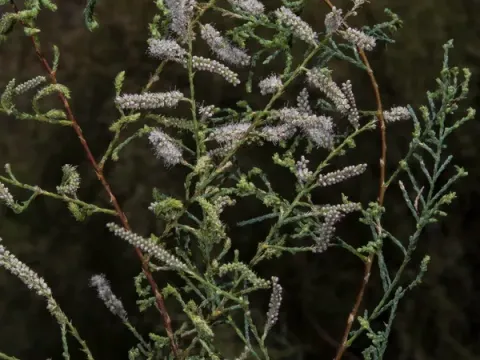
Muscat tamarisk
Tamarix mascatensis
Muscat tamarisk (Tamarix mascatensis) is a hardy perennial shrub belonging to the Tamaricaceae family, highly valued for its ability to thrive in saline and arid environments where other vegetation fails.
What the section contains
Muscat tamarisk
Originating from the desert regions of the Middle East, this plant has evolved deep-reaching roots and salt-secreting glands on its foliage, making it a critical species for soil stabilization and anti-erosion efforts in harsh climates.
Botanically, it features slender, flexible stems covered with scale-like leaves, which allow it to conserve moisture efficiently during prolonged heatwaves and intense solar radiation.
For successful cultivation, the species requires full sun exposure and well-drained soil. It is remarkably indifferent to soil pH, making it suitable for reclaimed lands or coastal areas affected by salt spray.
Agricultural management is minimal once established, primarily involving initial irrigation during the first season and occasional pruning to maintain density and structural health in protective shelterbelts.
Major pests affecting Muscat tamarisk include scale insects and various species of mites that target the succulent new growth, potentially reducing the overall vitality and aesthetic value of the shrub.
Fungal diseases, such as leaf blight or powdery mildew, may occur if the plants are situated in areas with stagnant air and excessively high humidity, hindering the natural drying process of the canopy.
Integrated pest management strategies should emphasize the use of horticultural oils for early infestations, which effectively control populations without harming the surrounding beneficial insect fauna.
Removing dead or decaying branches during the dormant season is a crucial practice to prevent the spread of pathogens and encourage vigorous regrowth during the following spring cycle.
Overall, maintaining the plant's health relies on providing adequate space between individuals to allow proper air circulation, which naturally limits the spread of most common pathogens.