
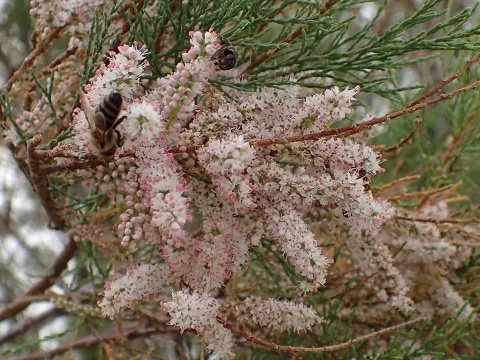
Smyrna tamarisk
Tamarix smyrnensis
Smyrna tamarisk (Tamarix smyrnensis) is a deciduous shrub belonging to the Tamaricaceae family. It is widely recognized for its high tolerance to saline soils and drought, making it an essential species for ecological stabilization.
What the section contains
Smyrna tamarisk
Native to parts of Southeast Europe and Western Asia, this plant occupies diverse habitats ranging from riverbanks to dry, sandy landscapes. Its adaptation to harsh environmental conditions makes it a valuable asset for agricultural landscapes.
The plant thrives in full sun and well-drained soil. It is exceptionally well-suited for coastal regions and desert areas where soil salinity prevents the cultivation of traditional agricultural crops.
Botanical features include feathery, scale-like leaves and pink, plume-like inflorescences that appear during the spring and summer. These features contribute to its popularity in both xeriscaping and reclamation projects.
Cultural practices are minimal, focusing on initial establishment. Once deep roots are developed, the plant becomes remarkably self-sufficient, requiring little intervention even in prolonged dry periods.
The main pests affecting this species include various beetle species and leaf-feeding insects that may target the delicate foliage during the peak growing season.
Fungal pathogens such as root rot or wilt can occur, particularly in areas with poor drainage or excessive humidity levels that remain constant for long durations.
Management of these threats involves routine pruning to improve airflow through the canopy, which significantly reduces the risk of fungal establishment and insect infestations.
Farmers should conduct regular assessments of plant health to ensure that any outbreaks are addressed quickly before they spread to larger clusters of the plantation.
Environmental management and site preparation remain the most effective strategies for maintaining the health of Tamarix smyrnensis throughout its life cycle.