
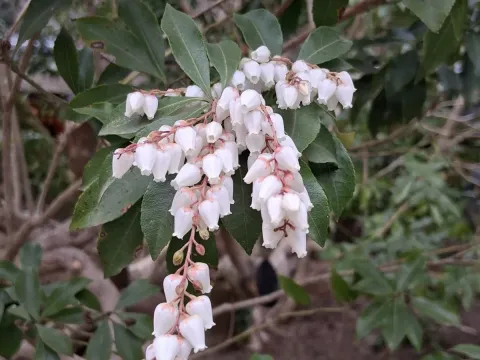
Taiwan pieris
Pieris taiwanensis
Taiwan pieris (Pieris taiwanensis) is an evergreen ornamental shrub belonging to the Ericaceae family. Native to the mountainous regions of Taiwan, this plant is well-adapted to high-humidity, forested environments.
What the section contains
Taiwan pieris
The cultivation of this species requires specific soil conditions. It thrives exclusively in acidic soil with a pH ranging from 4.5 to 5.5, which must be well-drained and rich in organic matter to support healthy root development.
Choosing the correct location is essential for growth. The plant prefers partial shade, as direct intense sunlight can scorch its leaves, while deep shade significantly reduces the frequency and density of the spring blooms.
Consistent moisture management is a critical aspect of pieris agrotechnics. The plant requires regular watering with lime-free water and benefits greatly from a high-humidity environment, especially during the active growth phase.
Routine mulching is a standard agricultural practice for this species. Applying a layer of pine needles or acidic peat around the base helps retain moisture, suppresses weeds, and maintains the required soil acidity level.
The primary threat to Taiwan pieris is root rot, typically caused by Phytophthora species. This disease is exacerbated by poor drainage and waterlogged soil conditions, which inhibit oxygen uptake in the roots.
Leaf spot infections are common in overly dense plantings. These fungal diseases proliferate during periods of high humidity and poor airflow, often requiring fungicide treatment to control the spread.
Lace bugs (Stephanitis takeyai) are the most significant insect pest. They feed on the undersides of leaves, causing a stippled appearance and premature leaf drop, which severely impacts the shrub's ornamental value.
Spider mites can also be a problematic pest during hot, dry summer months. Regular monitoring of the foliage and the application of appropriate acaricides can prevent severe infestation.
Good garden hygiene, including the removal of dead wood and fallen leaves, is recommended to minimize the overwintering of pathogens and pests within the vicinity of the plant.