
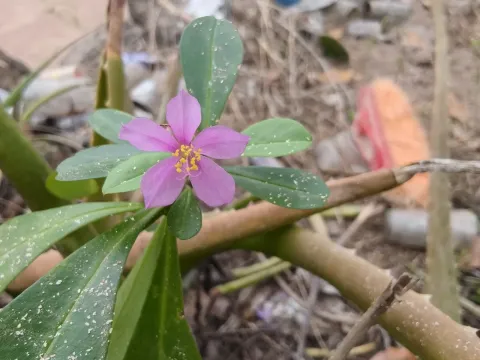
Talinum crassifolium
Talinum crassifolium
Talinum crassifolium, commonly known as a type of Ceylon spinach or leaf ginseng, belongs to the Talinaceae family and is an edible succulent perennial.
What the section contains
Talinum crassifolium
Propagation is usually achieved through seeds, which require warm temperatures to germinate, typically between 20°C and 25°C in a well-drained medium.
Seeds should be sown shallowly, as they are very fine and require ambient light to successfully break dormancy and sprout within two weeks.
For commercial production, seedlings are raised in trays before being transplanted to the field once the threat of frost has completely passed.
Direct seeding is only recommended in tropical climates where the soil remains consistently warm throughout the growing season.
The plant thrives in full sun, which is essential for maximizing leaf thickness and nutrient content, although it can tolerate light partial shade.
Soil requirements include excellent drainage, as the fleshy leaves and roots of the plant are highly susceptible to rot in waterlogged conditions.
A sandy or loam-based soil with a neutral pH is ideal for promoting rapid growth and developing a healthy, succulent foliage structure.
Talinum crassifolium is known for its heat tolerance, making it an excellent candidate for cultivation during the hottest months of the year.
Regular water supply is necessary for optimal yields; however, the soil surface should be allowed to dry slightly between irrigation events.
This crop is primarily harvested for its edible leaves, which are rich in vitamins, minerals, and various phytonutrients beneficial for human health.
Yield efficiency is increased through frequent pruning, which encourages the plant to branch out and produce new, tender vegetative growth.
Under controlled greenhouse conditions, the plant can provide multiple harvests throughout the season, significantly increasing total biomass production.
Market demand for Talinum is growing as it serves as a nutritious alternative to traditional leafy greens in warm-climate culinary traditions.
Productivity per square meter is substantial when managed with proper nitrogen-based fertilization and consistent harvest intervals.
The main threats to this crop involve fungal pathogens, particularly root rot, which thrives if the soil remains excessively moist for too long.
Pests like aphids and spider mites can occasionally affect the younger, more tender parts of the plants, especially in closed greenhouse environments.
Good air circulation is vital for preventing the onset of powdery mildew, which can develop if humidity levels are kept consistently too high.
Snails and slugs can damage the foliage, particularly during the seedling stage, requiring manual monitoring or organic barrier methods for protection.
Integrated pest management is recommended, focusing on maintaining plant vigor rather than relying on heavy chemical interventions for disease control.
Harvesting begins roughly 50 to 70 days after planting, once the plant has established a robust root system and sufficient leaf mass.
The leaves and soft stems are hand-picked or cut, leaving the base of the plant intact to allow for continued regeneration of new foliage.
It is best to harvest in the early morning when the leaves are fully turgid and contain the highest amount of natural moisture content.
Post-harvest handling is critical; the leaves should be cooled immediately to maintain shelf life and prevent wilting during transportation.
Properly packaged and refrigerated, the harvested leaves can maintain their quality for several days, making them suitable for local market distribution.