
Senegal tamarisk
Tamarix senegalensis
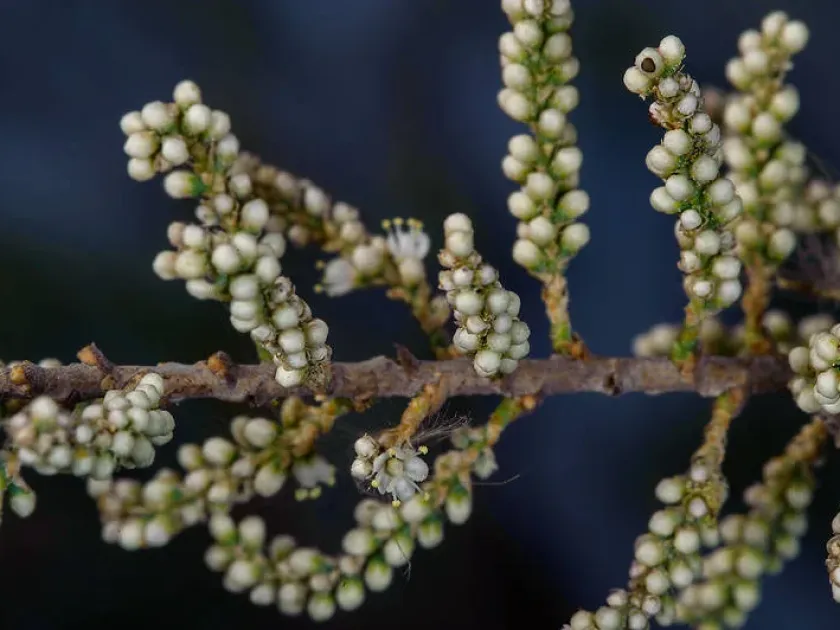
Description
Growing requirements
Senegal tamarisk (Tamarix senegalensis) is a hardy shrub belonging to the Tamaricaceae family. It is recognized for its remarkable ability to thrive in saline environments, often growing in coastal regions where other vegetation struggles to survive.
Originating from the coastal areas of Africa and the Middle East, this species is well-adapted to high-salinity soil conditions and arid climates. It has evolved specialized salt-secreting glands on its leaves, which allow it to maintain water balance in harsh ecological niches.
The culture requires full sun exposure for optimal development. It is highly intolerant of shade and performs best when planted in open spaces with sufficient airflow, mimicking its natural habitat along the seashore.
Soil requirements are minimal regarding fertility, but excellent drainage is non-negotiable. Sandy and silty soils are preferred, as they provide the necessary aeration for the deep, expansive root system characteristic of this genus.
In terms of agricultural management, irrigation is typically unnecessary once the plant is established. Its deep taproots reach underground moisture, making it an excellent candidate for landscape restoration and windbreak projects in dry, saline regions.
Main diseases and pests
Senegal tamarisk is naturally resilient to many common plant diseases. Its high salt content acts as a biological deterrent against numerous fungi and bacteria that typically infect woody perennials in subtropical zones.
The primary pests affecting this species include various beetle larvae and defoliators. While rarely lethal, significant infestations can reduce the growth rate of young shrubs and impact their aesthetic or functional value in windbreak plantations.
Root rot, caused by waterlogged soil, remains the most critical threat to the plant's health. Improving soil permeability and avoiding poorly drained depressions are essential cultural practices for preventing these fatal conditions.
Small mammals, such as rodents, may damage the bark of saplings during dry seasons when other food sources are scarce. Protective measures, including mechanical barriers, are recommended during the first stage of growth.
For sustainable maintenance, integrated pest management is preferred over chemical interventions. Regular monitoring ensures that any issues are detected early, maintaining the overall health and vigor of the tamarisk stands.