
Tamarix hampeana
Tamarix hampeana
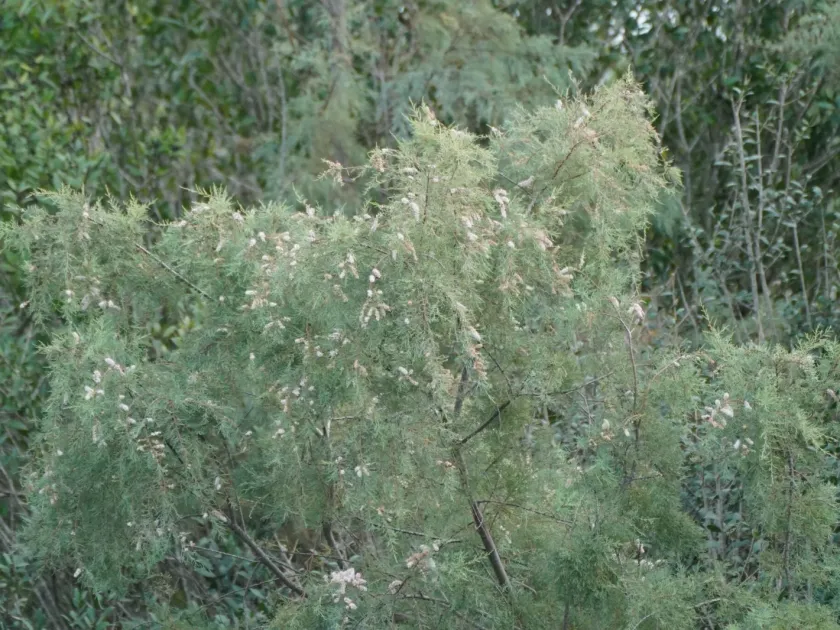
Description
Growing requirements
Tamarix hampeana is a resilient shrub belonging to the Tamaricaceae family, recognized for its exceptional adaptability to challenging environmental conditions. It is a deciduous woody plant that thrives in regions with significant seasonal climate variations.
Native to parts of Southeastern Europe and Western Asia, the species is perfectly evolved for habitats characterized by intense sun exposure and sandy or saline substrates. It possesses deep root systems that allow it to survive in areas with limited annual rainfall.
Soil requirements for this crop are relatively modest, provided that the location offers excellent drainage. Waterlogging is the most critical threat to its health, thus, heavy or clay-based soils should be amended with organic matter or sand to improve porosity.
The agrotechnical management focuses primarily on structural pruning to maintain the desired shape and enhance vegetative vigor. During the establishment phase, supplemental watering is necessary to support young plants until their roots are fully established in the soil matrix.
This species is highly valued for its ability to stabilize fragile soils and act as a windbreak in arid agricultural zones. Its biological cycle allows it to remain productive under extreme heat, where traditional crops would often fail due to transpiration stress.
Main diseases and pests
While generally hardy, Tamarix hampeana may be susceptible to infestations by spider mites, particularly during periods of prolonged heat and drought. Regular inspection of the foliage is essential to detect pest activity before it causes significant damage.
Fungal diseases, such as leaf spot or bark cankers, can occur if humidity levels are consistently high or if the plants are situated in stagnant air environments. Adequate spacing is crucial for maintaining proper airflow through the canopy.
Stem-boring insects can occasionally affect older, weakened shrubs. Early identification of exit holes and the removal of compromised branches are effective measures to maintain the overall health of the planting site.
Integrated pest management strategies should be employed, prioritizing biological controls when possible. If chemical intervention is required, selective insecticides should be applied with caution to protect beneficial organisms in the surrounding ecosystem.
- Monitor for signs of spider mite webbing
- Prune dead or diseased branches annually
- Maintain proper soil drainage
- Implement a balanced fertilization schedule during early growth