
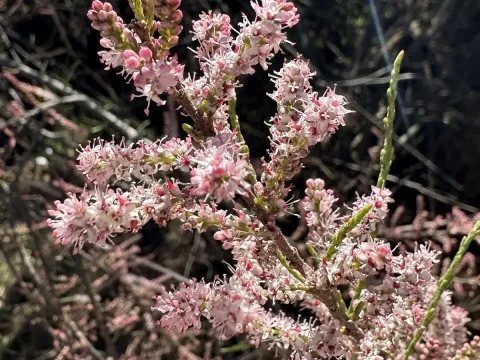
Small-flowered tamarisk
Tamarix parviflora
The small-flowered tamarisk (Tamarix parviflora) is a deciduous shrub or small tree within the Tamaricaceae family. It is widely recognized for its feathery, pink-flowered foliage and exceptional adaptability to harsh environments.
What the section contains
Small-flowered tamarisk
Originating from Southeastern Europe and Asia Minor, this plant is naturally suited to arid and semi-arid climates. Its geographic range reflects its resilience, as it thrives in regions where water scarcity limits other plant species.
The cultural requirements are minimal, as the shrub is well-known for its salt tolerance. It excels in sandy, gravelly, or alkaline soils that would be considered poor or marginal for traditional agricultural crops.
Climate needs are centered around high light intensity. It is a heliophilous species that requires full sun exposure to maintain its compact habit and produce abundant flowering during the spring season.
Agronomical management focuses on excellent drainage. While the plant can tolerate short periods of flooding, consistent waterlogging is detrimental, necessitating a site that allows for rapid water infiltration and proper root oxygenation.
The small-flowered tamarisk maintains a high level of natural resistance to common plant diseases. However, in overly humid climates or poor air circulation, it may occasionally suffer from verticillium wilt or various fungal leaf spots.
Pests are rarely a severe problem for established plants, but aphids and scale insects can colonize new growth during periods of rapid vegetative development. These pests primarily cause cosmetic damage and reduce overall vigor.
Integrated pest management, including monitoring and biological control, is sufficient for maintaining the health of the crop. Chemical interventions are typically reserved for extreme infestations during the early stages of growth.
Sanitation practices are essential for disease prevention. Removing dead or crossing branches in the late dormant season prevents the accumulation of inoculum and promotes a healthy internal structure of the shrub.
Finally, avoiding excessive nitrogen fertilization is recommended to prevent soft, succulent growth that is more prone to aphid attacks. A balanced approach to nutrition ensures a robust plant capable of defending itself against environmental pressures.