
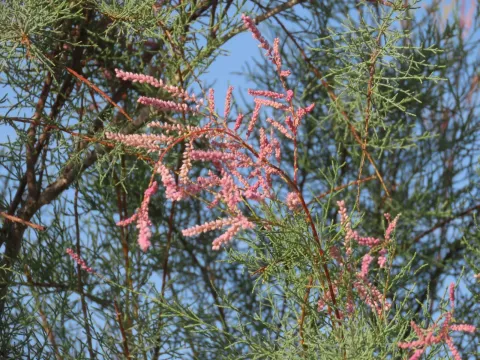
Saltcedar
Tamarix ramosissima
Propagation of Tamarix ramosissima is most efficiently achieved through hardwood cuttings, which show high rates of survival when prepared during the dormant season.
What the section contains
Saltcedar
Cuttings should be approximately 20 to 30 centimeters in length and planted into well-prepared soil in early spring before the buds begin to swell significantly.
When establishing new plantations for erosion control, seedlings raised in nursery conditions provide the most reliable results regarding uniform growth and development.
The planting site must be kept free of competing weeds during the initial growing season to ensure the young saltcedar plants receive adequate nutrients and light.
Although seed propagation is possible, it is rarely used in large-scale agriculture due to the extremely small size of the seeds and their specific germination requirements.
Belonging to the Tamaricaceae family, Tamarix ramosissima is a hardy shrub known for its remarkable tolerance to high levels of soil salinity and alkalinity.
This species thrives in full sun exposure, requiring at least 6 to 8 hours of direct light daily to maintain its structural integrity and encourage regular flowering.
It is highly adaptable to a variety of soil textures, ranging from heavy clays to loose sandy soils, making it an excellent candidate for land reclamation projects.
The plant exhibits superior drought resistance once established, as it can extend its roots deep into the soil profile to access available groundwater reserves.
While tolerant of harsh environments, the plant performs best in regions with moderate to high temperatures during the summer months, supporting its rapid growth cycle.
Fungal diseases can occur in areas with poor drainage or excessive humidity, potentially leading to branch dieback and reduced overall vigor of the shrub.
Pest issues such as scale insects and aphids often target young succulent growth, requiring strategic intervention to prevent damage to the terminal branches.
The use of integrated pest management, including regular pruning and thinning, helps maintain sufficient airflow and light penetration, effectively reducing the risk of infestation.
Root rot is rarely an issue in native or well-drained habitats, but it becomes a major threat if the soil remains waterlogged for extended periods during the growing season.
Agricultural managers should perform periodic inspections to identify early symptoms of chlorosis or pest activity, ensuring timely application of appropriate treatments.