
Tamarix boveana
Tamarix boveana
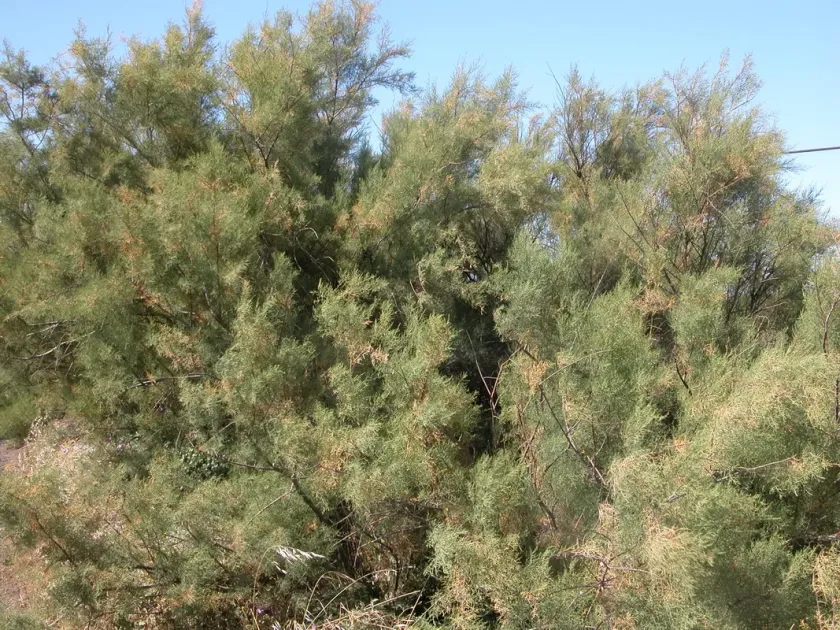
Description
Growing requirements
Tamarix boveana is a resilient shrub belonging to the Tamaricaceae family, native to arid and saline environments. It is highly valued for its ability to thrive where soil salinity levels prevent the growth of traditional agricultural crops.
The plant exhibits remarkable adaptation to harsh climates, utilizing a deep root system to access groundwater in semi-arid regions. It acts as a vital tool for preventing soil erosion and stabilizing sandy landscapes in challenging terrain.
Optimal growth requires full sun exposure. This species is strictly heliophilous and performs poorly in shaded conditions; therefore, planting sites must be selected with maximum sunlight exposure in mind to ensure healthy development.
Regarding soil requirements, Tamarix boveana is famous for its halophytic nature. It excels in sandy and saline soils, where its leaves often secrete salts, a unique mechanism that helps the plant balance osmotic pressure and survive in hostile environments.
Agricultural and landscape applications for this plant include the establishment of protective shelterbelts, phytoremediation of degraded lands, and its use as a hardy ornamental species in Mediterranean-style landscaping in desert climates.
Main diseases and pests
While extremely hardy, the plant can be susceptible to specific pests, such as weevils, which may damage emerging buds and terminal shoots during the active growth season, potentially reducing the plant's overall vigor.
Fungal pathogens represent a threat primarily when the plant is subjected to waterlogged soil conditions. Excessive moisture in the root zone can lead to root rot, which is a significant health concern for this desert-adapted species.
Leaf-feeding caterpillars occasionally emerge as a nuisance, particularly in nursery settings, where their population densities may rise to levels requiring integrated pest management intervention to protect young foliage.
Maintaining proper soil drainage is the most effective preventative measure against disease outbreaks. Providing enough space between plants ensures air circulation, which helps manage humidity levels around the foliage.
In forest management and land reclamation projects, the focus is on maintaining a healthy, stress-free environment rather than chemical intervention, as the plant's natural defenses are usually sufficient to manage minor pest pressures.