
Saltcedar
Tamarix chinensis
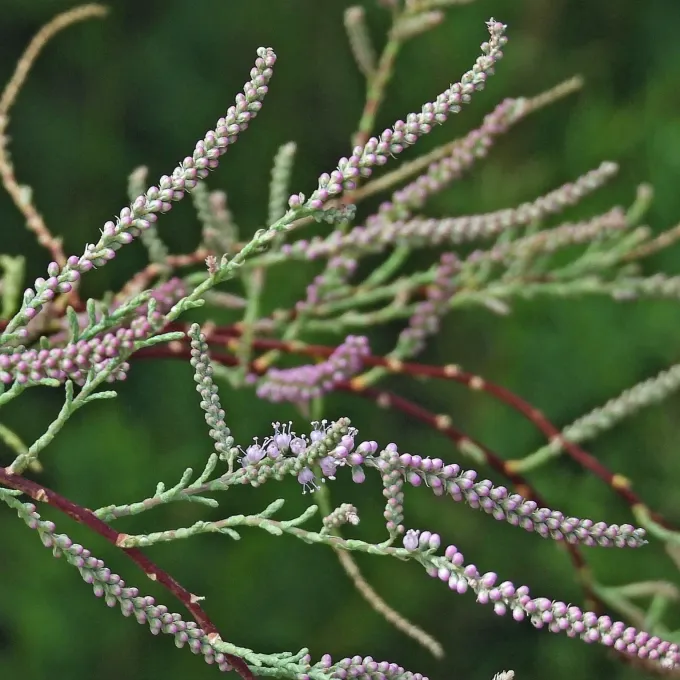
Description
Growing requirements
Tamarix chinensis, commonly known as saltcedar, belongs to the Tamaricaceae family and is native to regions of East Asia, including China and Mongolia.
This shrub is highly valued in agriculture and land management for its ability to thrive in harsh, saline, and arid environments where other crops fail.
The plant requires full sun exposure and prefers well-drained soil types, such as sandy, loamy, or even stony substrates with moderate to deep moisture levels.
Botanically, it is characterized by fine, scale-like leaves and pink flowers, and it exhibits high tolerance to drought and high salinity in both soil and irrigation water.
Agricultural management primarily focuses on initial establishment phases, as the plant becomes extremely hardy and drought-tolerant once its deep root system is developed.
Main diseases and pests
The primary threat to the health of Tamarix chinensis is root rot, which typically develops in poorly drained areas or during seasons of excessive water accumulation.
Insect pests such as aphids and various species of leaf beetles are known to feed on the foliage, which can retard growth in younger, less established plants.
Spider mites may also pose a risk during exceptionally hot and dry weather conditions, potentially causing yellowing and shedding of the finer branches.
Integrated pest management strategies are recommended, emphasizing cultural practices like proper site selection and sanitation over heavy chemical reliance.
In cases of severe infestation, specialized systemic insecticides can be utilized to protect the integrity and aesthetic value of the shrub canopy.