
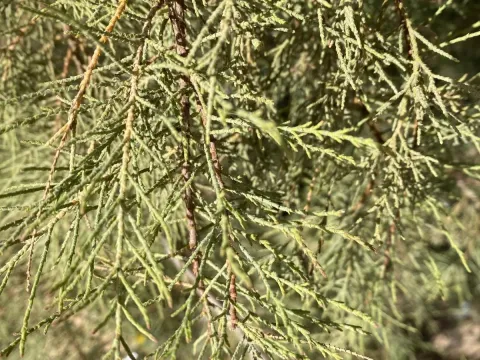
Tamarix amplexicaulis
Tamarix amplexicaulis
Tamarix amplexicaulis is a hardy member of the Tamaricaceae family, renowned for its exceptional ability to thrive in extremely arid and saline environments. As a perennial shrub or small tree, it has evolved specific morphological traits to cope with nutrient-poor and high-salinity soils.
What the section contains
Tamarix amplexicaulis
The plant originates from the arid zones of North Africa and Western Asia, where it plays a critical ecological role. It is well-adapted to sandy, gravelly, or saline substrates, functioning effectively where conventional crop plants would fail due to osmotic stress or drought.
The botanical identity of Tamarix amplexicaulis is defined by its small, scale-like leaves that sheath the stems. This characteristic anatomy minimizes the surface area exposed to the sun and wind, effectively reducing water loss through transpiration in intense heat.
Climate requirements for this species are centered on high solar radiation and low precipitation levels. It is a heliophilous plant that requires full sun exposure for healthy physiological development, growth, and the maintenance of its typical structural integrity.
In agricultural practice, this species is highly valued for land reclamation projects. It serves as a biological tool for stabilizing shifting sand dunes and protecting agricultural plots from wind erosion, acting as a robust windbreak in desert and semi-desert farming regions.
The primary threats to this species involve pathogenic fungi that flourish under conditions of excessive soil moisture or poor air circulation. Overwatering or planting in areas with poor drainage can trigger root rot, leading to the rapid decline and death of the plant specimens.
Insect pests such as leaf beetles and scale insects frequently pose a challenge to the vitality of the foliage. Integrated pest management strategies, focusing on early detection and precise chemical or organic control, are necessary to protect the plant from severe defoliation and stunted growth.