
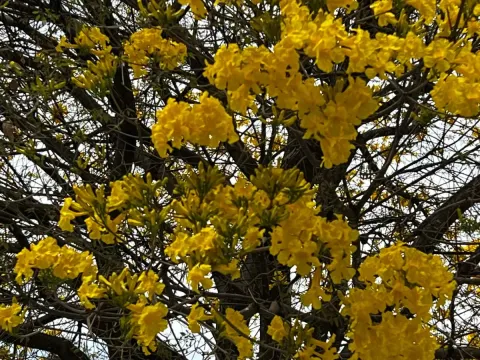
Tecoma serratifolia
Tecoma serratifolia
Tecoma serratifolia is a significant tree species belonging to the Bignoniaceae family, known for its robust growth and high-quality timber.
What the section contains
Tecoma serratifolia
Originating from the tropical regions of South America and the Caribbean, this species thrives in climates characterized by stable high temperatures and distinct wet seasons.
The tree requires well-drained, nutrient-rich soils to reach its full potential, avoiding sites prone to waterlogging or heavy clay accumulation.
Full sun exposure is mandatory for healthy development; limited light results in sparse foliage and significantly reduces the spectacular yellow floral display.
It adapts well to various soil types provided there is adequate aeration, making it a versatile choice for agroforestry projects in tropical zones.
The tree is primarily cultivated for its exceptionally durable wood, often marketed as one of the hardest woods available, known for its resistance to rot.
Its timber is highly valued in luxury furniture making, high-end construction, and maritime engineering due to its density and longevity.
In landscaping, Tecoma serratifolia is prized for its ornamental value, producing a mass of vibrant yellow flowers that bloom after shedding leaves.
Agroforestry applications include using the tree in protective shelterbelts, which mitigate wind erosion and provide structure to the agricultural landscape.
Sustainable harvesting is essential, as the species requires long growth cycles to reach the maturity needed for high-quality timber production.
Fungal pathogens associated with excessive soil moisture are the most significant threat to the root system, often leading to crown dieback.
Insect pests, including various leaf-eating beetles and wood-boring larvae, can jeopardize the health of young stands if not managed properly.
Termite infestations pose a structural risk to mature trees, potentially degrading the wood quality and impacting the economic yield of the plantation.
Regular sanitation programs are necessary to remove dead or infected branches, which serve as reservoirs for diseases and pest colonies.
Integrated Pest Management (IPM) practices are recommended to maintain plantation health while minimizing the use of synthetic chemical inputs.