
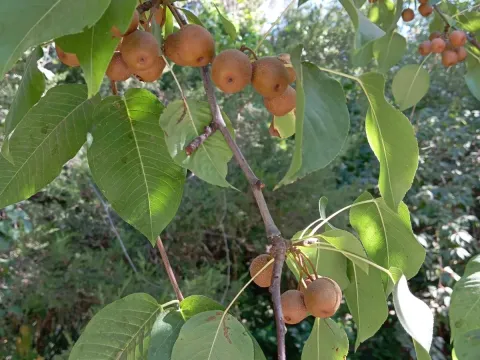
Pear-leaved pear
Pyrus pyrifolia (Burm. f.) Nakai var. culta (Mak.) Nakai
The Pear-leaved pear, scientifically known as Pyrus pyrifolia and often referred to as the Asian or Nashi pear, belongs to the Rosaceae family. Its native range encompasses central and eastern China, as well as parts of Japan and Korea.
What the section contains
Pear-leaved pear
This species thrives in well-draining, fertile soils rich in organic matter. It prefers full sun exposure to ensure optimal fruit development, sugar accumulation, and consistent annual productivity across the orchard.
Adequate water management is crucial for this crop, requiring consistent moisture without waterlogging the roots. The tree is generally hardy, though it benefits from shelter in regions with high winds to prevent damage to branches and fruit.
Maintenance practices involve precise pruning to maintain an open canopy structure, which is vital for light penetration and airflow. Fertilization strategies should focus on balanced nutrient application tailored to soil analysis.
The fruit is commercially valued for its crisp, succulent, and refreshing texture, making it a staple for fresh consumption. Its long shelf life also facilitates wide distribution in the global export market.
Common pathological threats include pear scab and fire blight, which can severely affect the tree's health and reduce fruit quality. Strict adherence to sanitation protocols is necessary to minimize these risks.
Orchards are often targeted by pests like codding moth and pear psylla. Implementing an integrated pest management (IPM) program is recommended to balance chemical usage and beneficial insect conservation.
Root rot is a physiological concern in soils with poor drainage, which can lead to rapid decline of mature trees. Proper site selection and soil amendment remain the most effective preventative measures.
Environmental stress, such as late frost, can damage blossoms and impact yield. Using frost protection systems or selecting late-blooming varieties can mitigate these risks in cooler climates.
Regular inspection of the bark and leaves allows for early detection of potential outbreaks, enabling timely intervention before a minor issue develops into a widespread epidemic within the planting site.
Harvesting the Pear-leaved pear is a delicate process that must be performed by hand. Since the skin is thin and susceptible to bruising, workers must handle each fruit with extreme care to maintain its market value.
The harvest timing is dictated by skin color shifts and fruit firmness. Picking the fruit at the correct stage of maturity is essential, as the variety does not ripen significantly further once removed from the branch.
Post-harvest handling focuses on cooling the fruit rapidly to extend its shelf life. Cold storage facilities with high humidity are ideal for maintaining the characteristic crispness and flavor profile of the fruit.
Sorting and grading are typically performed immediately after harvest to identify premium fruit for fresh export. Proper packaging using soft cushioning materials ensures that the produce reaches the consumer in optimal condition.
Efficient logistics and transport are paramount for such high-value crops, as physical damage during movement can significantly reduce the shelf life and overall quality of the harvested batch.