
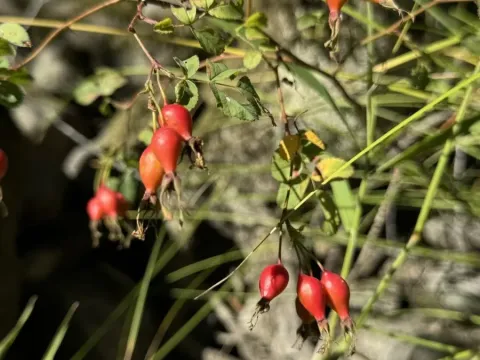
Pea-fruited rose
Rosa pisocarpa
Propagation of the pea-fruited rose in cultivation is most often carried out vegetatively by bush division or cuttings, which preserves varietal traits and accelerates plant adaptation.
What the section contains
Pea-fruited rose
Seed propagation is used less frequently as seeds require mandatory cold stratification for 2–3 months to improve germination rates.
The optimal timing for planting seedlings in open ground is spring, once the soil has warmed sufficiently, or early autumn, at least a month before the first frost.
When planting, it is crucial to maintain proper distance between shrubs, accounting for the spread of branches which can reach one and a half meters in diameter.
The planting site should be protected from strong winds and well-lit, although the plant can tolerate light shade in regions with hot climates.
The pea-fruited rose is a member of the Rosaceae family, natively found in the Pacific Northwest of North America, where it prefers moist, well-drained sites.
The crop has moderate soil requirements but thrives best in loamy substrates with a neutral or slightly acidic pH balance.
The plant exhibits high winter hardiness characteristic of Northern Hemisphere species and can withstand short-term temperature drops without critical damage to the root system.
Agricultural practices include regular irrigation during drought periods, as lack of moisture negatively affects foliage quality and fruit yield.
To maintain shrub health, it is recommended to perform sanitary pruning in the spring, removing dead, damaged, or overcrowded branches to improve airflow through the crown.
The economic use of Rosa pisocarpa is primarily directed at landscape design, where the shrub is valued for its ability to form dense, protective hedgerows.
The biological productivity of the plant is demonstrated by its abundant blooming of small pink flowers, followed by distinct small, pea-sized hips.
The fruits of this species serve as a vital food source for local bird populations, making the shrub a valuable component for ecological zones and woodland parks.
In traditional use, the fruits of wild roses are utilized as a vitamin source, though one must account for their specific tart flavor and the presence of hard seeds within the hips.
The decorative potential of the culture lies in the long period of time the hips remain on the branches, providing aesthetic appeal to the garden even during the winter season.
Like many species of the genus Rosa, this shrub can be susceptible to powdery mildew during periods of high humidity and poor air circulation within the canopy.
Pests such as aphids and spider mites may colonize young shoots and leaves, causing deformation and reducing the overall vigor of the plant.
To prevent fungal infections, it is recommended to avoid overhead watering and to promptly remove fallen leaves that may act as an inoculum source.
If insect infestations are detected, biological insecticides or insecticidal soaps should be used, as these are less toxic to beneficial pollinating insects.
Regular monitoring of the shrub throughout the growing season is the primary protection tool, allowing for the timely control of diseases and pests.