
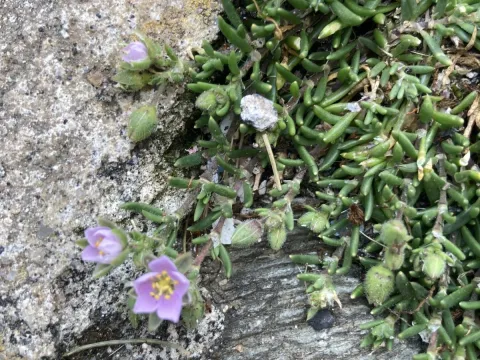
Rock sea-spurrey
Spergularia rupicola
Rock sea-spurrey (Spergularia rupicola) belongs to the Caryophyllaceae family. This perennial herb is native to rocky coastal habitats, which dictates its biological robustness and unique environmental preferences.
What the section contains
Rock sea-spurrey
For successful cultivation, sowing should be timed with the onset of warm spring weather. The seeds are small and require a finely prepared, well-draining seedbed to achieve optimal germination results.
Broadcast or light drilling methods are preferred for sowing. Since the seeds are light-sensitive, they should only be barely covered with soil to ensure they receive enough stimulation for growth.
Proper spacing between rows is essential for the crop to flourish without intense competition. A standard row distance of 20–30 centimeters is recommended for field-scale production to allow for mechanical weeding.
The seedling stage is the most critical period. Keeping the surface of the soil moist during the first 10–14 days is vital, but care must be taken not to waterlog the area, as this can trigger rot.
This species thrives in specific conditions characterized by excellent drainage and high sun exposure. It is highly adapted to sandy or rocky soils that naturally lack heavy nutrient profiles.
The plant possesses a remarkable tolerance for saline conditions. This makes it an ideal candidate for agricultural projects involving marginal lands or areas impacted by sea spray and salt contamination.
Soil pH levels should be managed to stay within the neutral to slightly alkaline range. Maintaining adequate soil structure through aeration is crucial for the health of its root system throughout the growing season.
Climate adaptability is a significant trait of rock sea-spurrey. It tolerates maritime climates well, though it performs best in regions with moderate rainfall that does not lead to standing water in fields.
Fertilization should be handled with caution. High nitrogen levels can lead to succulent, weak growth that is more susceptible to weather damage or fungal issues, so moderate, balanced fertilization is best.
The primary threats to Spergularia rupicola are moisture-related diseases. Phytophthora and other root-rot fungi can quickly decimate a crop if the soil remains saturated for extended periods.
Insects, particularly those that feed on tender young leaves, can cause significant damage in the early development phases. Pest management should focus on early detection through regular field scouting.
Fungal leaf spot diseases are another common threat, especially in areas with high humidity. Ensuring proper air circulation between plants is a highly effective cultural control method.
Weed pressure is a major concern as the crop establishes. Invasive weeds can outcompete the spurrey, so consistent removal of broadleaf weeds during the first month is standard practice.
To maintain crop health, it is essential to avoid mono-cropping for too many seasons. Rotating with crops that have different water requirements helps break the disease cycle and preserves soil health.